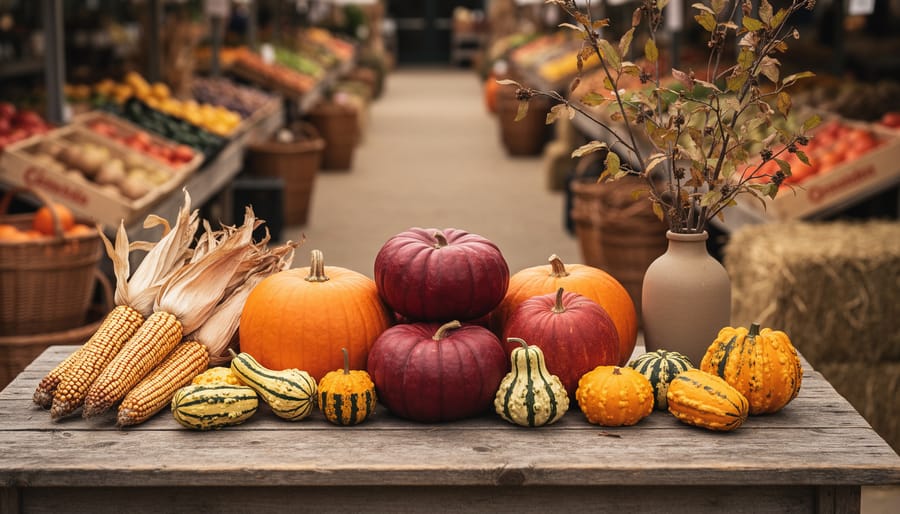
Transform your living space into an autumn haven by bringing home pumpkins, gourds, corn stalks, and seasonal branches from your local harvest market, then arranging them throughout your rooms using simple styling tricks that keep them fresh for weeks. The process takes just an afternoon and requires minimal investment, but the warm, organic atmosphere you’ll create rivals any store-bought decoration. The secret lies in selecting produce at peak freshness, prepping it properly to extend its lifespan, and grouping items by color and texture rather than scattering them randomly.
Walking through a bustling fall market awakens all your senses. The earthy smell of just-picked produce, the rich jewel tones of heirloom pumpkins, the rough texture of dried corn husks. These same elements, thoughtfully placed in your entryway or layered on your dining table, bring that vibrant energy indoors. Unlike artificial decorations, fresh market finds change subtly over time, deepening in color and developing character as the season progresses. Best of all, many items you select can pull double duty. That butternut squash centerpiece? It transitions beautifully into one of your favorite fall harvest recipes when you’re ready for a change. This guide walks you through exactly what to buy, how to prepare each element, and where to place everything for maximum impact.
What You’ll Need from the Harvest Market
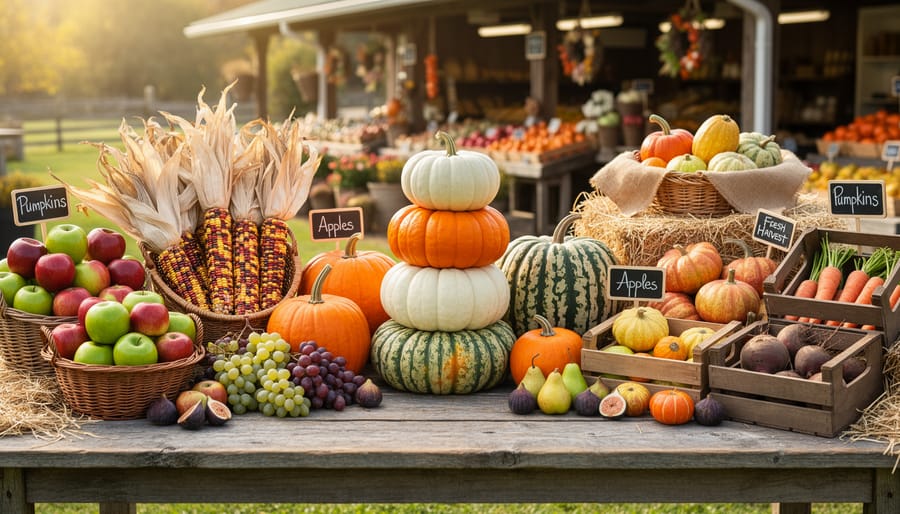
Start with the produce that forms the backbone of any fall harvest display. Look for pumpkins in varying sizes, from tiny cream-colored ones that fit in your palm to large, ribbed heirlooms with deep orange flesh. White and blue-grey pumpkins add unexpected elegance alongside traditional orange. Gourds bring texture: choose warty, bumpy varieties in green, yellow, and striped patterns. Their irregular shapes create visual interest when clustered together.
What to Bring Home:
- Pumpkins in mixed sizes and colors (mini through large, including white, blue, and heirloom varieties)
- Decorative gourds with interesting textures and patterns
- Indian corn with deep burgundy, golden, and cream kernels
- Wheat bundles, dried grasses, or ornamental corn stalks for height
- Fresh apples, especially varieties with stems and leaves still attached
- Seasonal flowers like sunflowers, chrysanthemums, or dried hydrangeas
- Branches with berries, seed pods, or interesting bark
- Winter squash such as acorn, delicata, or butternut for their sculptural shapes
When selecting items, gently press them to check for firmness. Avoid anything with soft spots, visible mold, or splits in the skin. The stem should be intact and dry, not green and freshly cut, which helps items last longer indoors. For wheat and corn stalks, choose bundles that feel dry to the touch rather than damp. Flowers should have tight blooms with no browning edges.
Pick up a few branches with interesting shapes or fall foliage still clinging to them. Oak, maple, and bittersweet vines add organic curves to arrangements. Trust your instincts: if something catches your eye and feels substantial when you hold it, it’ll probably work beautifully in your home.
Safety and Selection Tips
Before you bring your harvest finds home, a few simple checks ensure everything is safe and fresh for indoor display. You’ll protect your family and get weeks of beauty from your market treasures.
Start by inspecting each item closely at the market. Look for firm produce without soft spots, dark patches, or visible mold. Press gently on pumpkins and gourds, they should feel solid, not squishy. Skip anything with cuts, bruises, or mushy areas, since these won’t last indoors and can spread decay to other pieces in your arrangement.
If you have pets or small children, ask vendors whether items have been treated with pesticides or preservatives. Many decorative gourds receive surface treatments that make them unsafe if chewed or handled frequently. When in doubt, choose organic produce or items labeled for culinary use, which meet stricter safety standards. These simple precautions protect children and pets while letting you decorate freely.
For wheat bundles, corn stalks, and dried materials, shake them gently outdoors to dislodge any insects or debris. Check inside husks and between stems, you want botanicals, not hitchhikers. Dried items should feel crisp and smell pleasantly earthy, not musty or damp.
Trust your nose throughout the selection process. Fresh pumpkins smell faintly sweet and clean. If something smells sour, fermented, or moldy, leave it at the market no matter how pretty it looks.
Step-by-Step Decorating Process
Prep Your Harvest Finds
Start by giving your harvest finds a gentle rinse under cool water to remove field dirt and any surface debris. For pumpkins and gourds, use a soft cloth or your hands, no need for scrubbing that removes the natural bloom. Pat them dry immediately with a clean towel, paying extra attention to stems and crevices where moisture can hide.
Apples and small produce benefit from a quick dip in a vinegar-water solution (one part vinegar to three parts water), then a thorough rinse and complete drying. This helps remove any residue while preserving their natural appearance.
For wheat bundles, corn stalks, and dried elements, skip the washing entirely. A light shake outdoors to release loose chaff is usually enough. These items are already dry and washing them can encourage mold or cause them to deteriorate faster indoors.
Let everything air-dry completely before bringing it inside, this is crucial. Spread items on old towels in a single layer, turning them occasionally. Damp produce will rot quickly and attract fruit flies. Once fully dry, your harvest finds are ready to arrange, and that slight dustiness on pumpkin skin? That’s the patina that makes them look authentically farm-fresh.
Create Your Base Arrangements
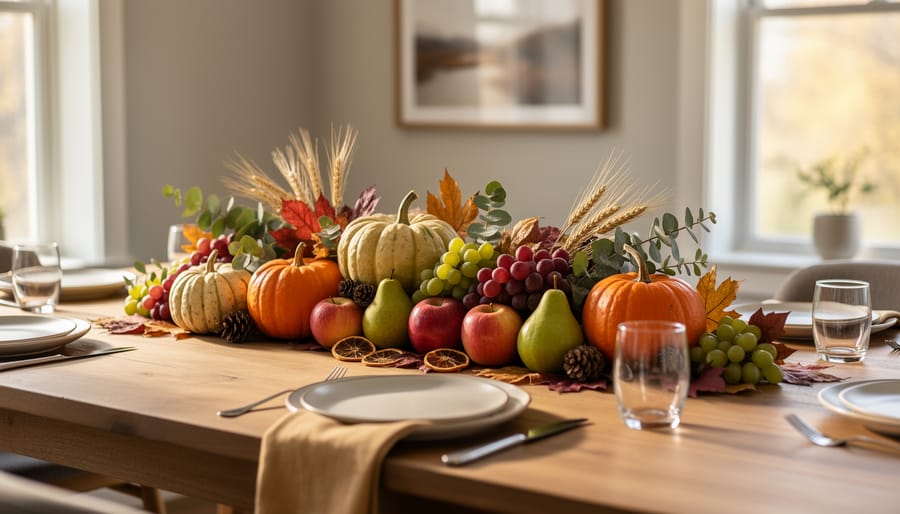
Start with the surfaces your guests see first, your entryway console and dining table are perfect foundations for harvest market displays. Choose a tray, shallow basket, or decorative bowl that complements your existing décor. Wood and woven materials work beautifully with fall’s natural textures, while metal trays add an unexpected modern contrast to rustic produce.
For your entryway, place a medium-sized tray on your console table and begin with your largest item, perhaps a cream-colored pumpkin or cluster of three small gourds. Position it off-center rather than dead center; this creates visual movement and keeps the arrangement from looking too stiff. Add two or three smaller elements around it: a handful of acorns, a few stems of wheat, or mini pumpkins in varying heights.
Your dining table deserves a longer, lower arrangement that won’t block conversation across the table. Use an elongated wooden tray or woven runner as your base. Start by placing items in odd-numbered groupings, three pumpkins of different sizes, five small gourds, seven apples. This naturally pleasing rhythm prevents the “lined up in a row” look that feels forced.
Layer in different heights by tucking sprigs of fall foliage between pumpkins or standing a few wheat stalks upright in a small jar. Scatter in small accents like nuts, crab apples, or decorative corn for texture variation. Check out more seasonal centerpiece ideas if you want additional inspiration for your table.
The secret is building your arrangement in triangles rather than straight lines, your eye travels more naturally through the display, making it feel organic and intentional rather than staged.
Build Vertical Interest
Tall elements pull the eye upward and make rooms feel more intentional. Gather your longest finds, wheat bundles, corn stalks, and interesting branches, and place them where they can stand proud without tipping.
For mantels, stand three to five corn stalks in a large ceramic pitcher or weighted vase on one end. Balance the other side with a low, wide arrangement of pumpkins and gourds. The contrast between vertical and horizontal creates natural visual rhythm that feels collected rather than staged.
Wheat bundles work beautifully in corners, flanking doorways, or tucked behind low furniture pieces. Tie them loosely with twine or raffia about two-thirds down from the top, this anchors the shape while keeping the stalks from splaying. A bundle in a tall milk can beside your front door instantly signals the season.
On shelves, lean a few dried branches against the back wall and layer smaller items in front. The branches add dimension without blocking what’s behind them. Mix heights deliberately: if you have a tall candlestick on the left, balance it with stacked pumpkins or a wheat bundle on the right.
The key is purposeful asymmetry, not matching pairs, but weighted balance that guides your eye around the room comfortably.
Layer Textures and Colors
The magic happens when you pair contrasting textures and colors side by side. Place a smooth butternut squash next to a rough, dried corn husk. Set creamy white pumpkins against deep orange gourds. This contrast creates visual depth that makes arrangements feel intentional and curated.
Think beyond orange. Mix burgundy apples with pale wheat stalks, or combine rust-colored mums with cream-colored Indian corn. The warm earth tones of harvest season naturally complement each other, but the real warmth comes from layering different finishes, glossy apple skins catching light while matte pumpkin surfaces absorb it.
Add textural variety in unexpected ways. Tuck fuzzy lamb’s ear leaves between smooth gourds, or nestle bumpy ornamental kale around polished apples. These subtle touches prevent displays from looking flat or one-dimensional. Your eye should travel across the arrangement, discovering new details rather than taking it all in at once.
Style Each Room
Scale your entryway with a tall wheat bundle beside a cluster of medium pumpkins. In the living room, keep mantel arrangements low and balanced, using mini gourds to fill gaps between larger pieces. For the dining area, choose centerpieces no taller than twelve inches so guests can see each other across the table. Kitchen counters work best with compact displays, a shallow bowl of lady apples or a small basket of colorful corn. Repeat one or two colors in every room to create visual flow without making each space feel identical.
Room-by-Room Harvest Decorating Ideas
Entryway and Porch Welcome
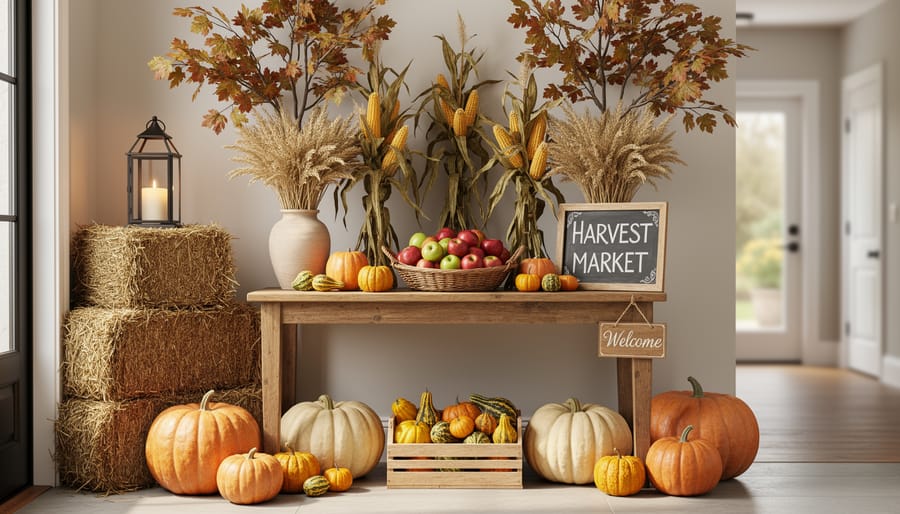
Your entryway sets the tone for your entire home’s harvest display. Start with a cluster of three to five pumpkins in varying sizes beside your front door, mix white, orange, and green for visual interest. Position tall corn stalk bundles on each side of the doorway, securing them with twine or raffia. Their height draws the eye up and frames your entrance beautifully.
Fill a large wicker or wire basket with colorful gourds and place it on your porch or just inside the door. The jumble of shapes and textures looks abundant and welcoming without appearing staged. If you have stairs, line a few pumpkins along the steps in descending sizes. For apartments or smaller spaces, a single arrangement in a rustic crate works perfectly. Add a few wheat stalks tucked around your pumpkins for movement and that classic harvest feel.
Dining Table Centerpieces
Keep your dining table centerpiece low and loose, about six to eight inches tall, so guests can easily see and talk to each other across the table. Start with a shallow bowl, wooden tray, or even a cutting board as your foundation. Layer in small sugar pumpkins, lady apples, and a few decorative gourds, letting them tumble naturally rather than sitting in a rigid line.
Tuck in sprigs of wheat, dried hydrangeas, or a few colorful leaves between the produce to add texture without blocking sightlines. Mix edible and purely decorative elements freely, a bowl of fresh apples and pears alongside mini ornamental pumpkins creates visual interest and keeps the arrangement feeling abundant without fussiness.
For everyday meals, keep it simple: three small pumpkins down the center with a few scattered walnuts or acorns. When Thanksgiving approaches, expand the same arrangement by adding more layers, candlesticks tucked among the gourds, or a low garland of fall leaves running beneath everything. The beauty of harvest centerpieces is their flexibility, you can build on what’s already there rather than starting from scratch for special occasions.
Living Room Accents
Mantels become natural showcases for harvest finds when you vary height and texture. Place a large cream pumpkin on one end, balance it with a wheat bundle on the other, and fill the center with smaller gourds and dried flowers tucked into a low wooden bowl. Keep arrangements asymmetrical rather than matched pairs, it feels more organic.
Coffee tables need displays you can see over and easily move for use. A wide, shallow basket filled with mixed mini pumpkins and scattered acorns works beautifully. Add one or two real apples for their glossy contrast against matte gourds.
For shelves, cluster three items maximum per vignette. A small pumpkin beside stacked vintage books, topped with a sprig of bittersweet, creates visual interest without crowding. Leave breathing room, empty space makes each harvest piece feel intentional rather than overwhelming.
Kitchen Touches
Your kitchen naturally bridges décor and functionality during fall. Arrange butternut squash, small sugar pumpkins, and colorful gourds in a large wooden bowl on your counter, they inspire tonight’s dinner while looking beautiful. Tuck a few Indian corn ears into a tall glass jar near your stove, or lean wheat bundles in a vintage crock by the sink.
Hanging dried herbs from a simple tension rod or hooks adds vertical interest and keeps ingredients within reach. Bundle lavender, rosemary, or sage with twine and suspend them near your cooking area. Fill a wire basket with apples and pears, creating a display that invites snacking while adding warm autumn color to your workspace. Every element serves a purpose, celebrating the season’s abundance exactly where you’ll use it most.
How to Know Your Display Is Working
Step back from your display and take a fresh look. The easiest test is how you feel when you walk into the room, does it make you smile, or does something feel off? A successful harvest arrangement should create an immediate sense of warmth and welcome, not make you pause to figure out what you’re looking at.
Check for balanced scale throughout the space. Your largest pumpkins shouldn’t overwhelm a small side table, and tiny gourds can get lost on a wide mantel. Everything should feel proportional to its setting. If one element pulls all your attention, either move it to a larger surface or surround it with complementary pieces to create a fuller scene.
Look at your color story from across the room. Successful displays blend warm oranges, golds, creams, and russets without jarring contrasts. If one bright orange pumpkin stands out like a traffic cone, nestle it among wheat bundles or surround it with neutral gourds to soften the impact.
Signs you’ve added too much: you can’t see the table surface, arrangements block conversation across the dining table, or the space feels cluttered rather than abundant. Edit by removing the smallest or least interesting pieces first. Signs you need more: large empty gaps between items, arrangements that look sparse or lonely, or displays that lack depth. Layer in dried grasses, small pumpkins, or scattered nuts to fill visual holes and create richness without overwhelming the eye.
Keeping Your Harvest Décor Fresh
Most pumpkins and hard squash hold up beautifully for four to six weeks indoors when kept dry and out of direct sunlight. Check them weekly for soft spots, if you find any, remove that piece immediately to prevent spreading. Apples, corn husks, and wheat bundles typically last two to three weeks before they start looking tired or attracting fruit flies.
Rotate your displays as items age. Move the freshest pumpkins forward and compost any that develop mold. Misting dried materials lightly once a week helps wheat and corn retain their color without getting soggy. If you’re committed to eco-friendly fall decor composting spent harvest finds completes the natural cycle beautifully.
As you transition from early October through Thanksgiving, refresh tired arrangements with new market trips. Swap faded gourds for deeper orange pumpkins, add cranberries or pomegranates for richer color, and tuck in fresh greenery clippings. Your displays should feel abundant and alive, not wilted. When items no longer spark that harvest warmth, it’s time to let them go and make room for what’s fresh.
Common Questions About Decorating with Harvest Market Finds
Can you eat decorative pumpkins and gourds?
Most decorative pumpkins are technically edible but taste bland and stringy compared to varieties bred for cooking. Small ornamental gourds are typically too bitter and tough to enjoy. If you want dual-purpose harvest décor, choose cooking varieties like sugar pumpkins or butternut squash that look beautiful and taste great in recipes.
How do I keep fresh produce from rotting indoors?
Choose firm, unblemished items without soft spots or cuts, and keep them in cool, dry areas away from direct heat sources. Wipe surfaces clean before displaying, avoid stacking heavy items, and rotate displays every few days to check undersides. Most hard-shell produce lasts three to four weeks indoors when properly cared for.
What’s the difference between decorative and cooking squash?
Decorative squash varieties are bred for interesting shapes, colors, and long shelf life rather than flavor or texture. Cooking squash has thicker, sweeter flesh and thin, edible skin. You can often tell by weight, cooking varieties feel heavy for their size, while decorative ones feel lighter and more hollow.
Will harvest decorations attract bugs or mice?
Fresh, intact produce rarely attracts pests indoors. Problems arise when items develop soft spots, cracks, or hidden damage that creates entry points. Inspect your displays weekly, remove any pieces showing signs of decay immediately, and avoid placing arrangements near pet food or uncovered trash.
Can I spray or seal harvest items to make them last longer?
You can wipe hard-shell pumpkins and gourds with a diluted vinegar solution to discourage mold, but skip shellac, hairspray, or clear sealants if you have pets or plan to compost later. Natural items will eventually break down, and that’s part of their seasonal charm, just refresh your displays as needed.
How do I know when it’s time to toss harvest décor?
Replace items when you notice soft spots, unpleasant odors, visible mold, or sagging shapes. If a pumpkin starts to collapse or feels squishy when you press gently, compost it right away. Fresh displays should look vibrant and smell earthy, not musty or sour.
These questions come up constantly, and the answers are simpler than you might think. The key is treating your harvest finds like the living materials they are, checking on them, giving them good conditions, and knowing when to let them go. You’re not looking for perfection or permanence. You’re celebrating a season that’s meant to change, and part of that beauty is refreshing your displays as the weeks pass. Trust your senses, stay ahead of any spoilage, and enjoy the process of keeping your home filled with the warmth and abundance of fall.
You don’t need a design degree or a Pinterest-perfect eye to bring fall harvest charm into your home. The real magic happens when you wander through your local market, run your hands over the cool, bumpy skin of an heirloom pumpkin, and imagine where it might land in your entryway. Trust your instincts. If a bunch of wheat makes you think of golden afternoon light on your dining table, buy it. If the deep burgundy of a decorative cabbage speaks to you, find a spot for it.
The beauty of decorating with harvest market finds is that there’s no wrong answer. These materials come straight from the earth, already beautiful in their imperfection. A crooked gourd tells a better story than a symmetrical one. Dried corn husks add more character than any store-bought garland ever could.
Start small this weekend. Pick up a few pumpkins, maybe some branches or a handful of apples. Set them somewhere you’ll see them every day. Notice how they shift the feeling in the room, how they remind you why this season feels so generous and grounding. That’s the harvest working its quiet magic, turning your house into the kind of home people remember long after autumn fades.