
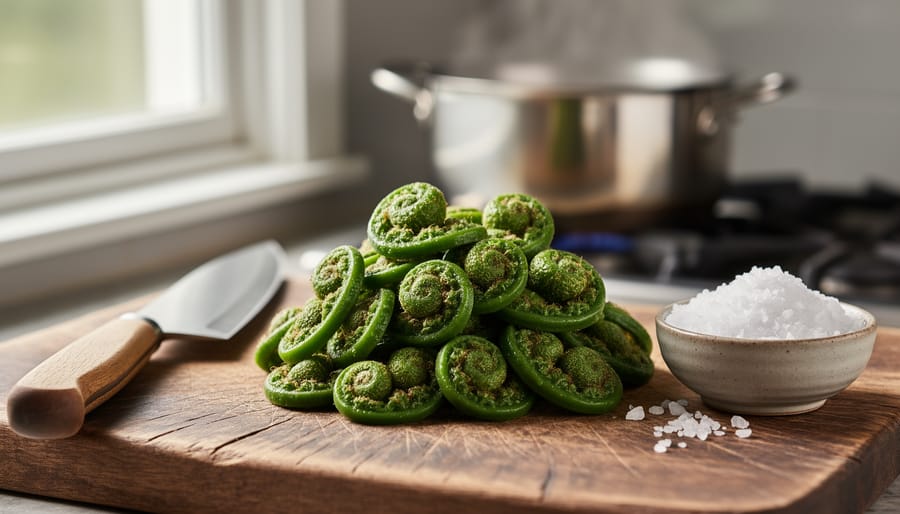
Cooking fiddleheads starts with a crucial safety step: boil them for at least 10 minutes to eliminate natural toxins that can cause stomach upset. These tightly coiled fern shoots, harvested in early spring, have a delicate asparagus-meets-green-bean flavor that makes them worth seeking out at farmers’ markets. Before you cook them, trim the brown ends and remove any papery brown scales, then rinse thoroughly under cold running water to wash away grit and debris.
The most reliable cooking method is boiling. Bring a large pot of salted water to a rolling boil, add your cleaned fiddleheads, and cook for 10-12 minutes until tender but still bright green. Drain immediately and plunge them into ice water to stop the cooking and preserve that gorgeous color. From here, you can sauté them in butter with garlic, toss them into pasta, or serve them as a simple side with lemon and sea salt.
Never eat fiddleheads raw or undercooked. This isn’t negotiable. But once properly prepared, these seasonal treasures bring a taste of spring to your table that’s genuinely special. They’re only available for a few short weeks each year, making them feel like a celebration of the season itself.
What Are Fiddleheads and When Can You Find Them?
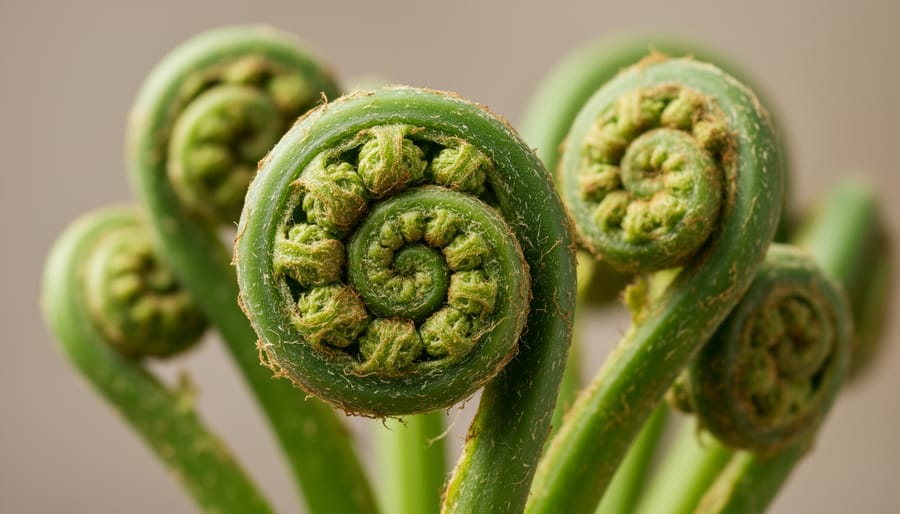
Fiddleheads are the tightly coiled, unfurled fronds of young ostrich ferns, named for their resemblance to the spiral scroll at the head of a violin. These bright green spirals emerge from the forest floor each spring for just a few precious weeks, making them one of the season’s most eagerly anticipated foraged treats. Their distinctive coiled shape isn’t just charming to look at; it’s your visual cue that you’ve found the real thing, with each frond curled into a tight spiral before it unfurls into a full fern leaf.
Timing matters because fiddleheads are only edible in their tightly coiled juvenile stage. Once the fronds begin to unfurl, they develop compounds that make them bitter and unpalatable. This narrow harvest window adds to their special-occasion appeal and connects you directly to the rhythms of the season.
The flavor is often compared to asparagus with a subtle, earthy nuttiness that some describe as reminiscent of green beans or artichokes. The texture, when properly cooked, is tender yet slightly firm with a pleasant snap. Beyond their delicious taste, fiddleheads pack impressive nutrition into those little coils. They’re rich in omega-3 and omega-6 fatty acids, loaded with antioxidants, and provide a good dose of vitamin A, vitamin C, and iron. Their arrival in spring feels like nature’s way of replenishing us after winter, offering fresh greens right when we crave them most.
Foraging and Sourcing Fiddleheads Responsibly
You’ll find fiddleheads popping up at farmers markets and specialty grocers during their brief spring window. Local markets are your best bet for fresh, well-handled fiddleheads, often sold by the same foragers who harvested them that morning. Supporting these small-scale harvesters keeps your dollars local and ensures you’re getting peak-quality greens.
If you’re tempted to forage your own, wonderful! Just make sure you truly know what you’re looking for. Fiddleheads have specific identifying features, and foraging should only be attempted with solid knowledge or an experienced guide. When you do harvest, sustainable practices matter deeply. Take only a few fronds from each plant, never stripping an entire cluster, so the fern can continue growing. Leave plenty behind for wildlife and future seasons.
For those of us growing our own food at home, fiddleheads aren’t something you can add to your vegetable garden ideas since they’re wild ferns rather than cultivated vegetables. That makes finding a trusted local source even more valuable.
Choosing locally foraged or farmer-grown fiddleheads reduces transportation miles and connects you directly to your foodshed. It’s the earth-friendly way to enjoy this fleeting seasonal treasure.
Essential Safety: Why Proper Preparation Matters
Before you fall in love with fiddleheads and their delicate flavor, there’s one safety rule you need to know: these spring beauties must always be cooked thoroughly. Raw or undercooked fiddleheads carry a raw or undercooked risk of foodborne illness that can cause nausea, vomiting, and diarrhea within hours of eating them.
The good news? Proper cooking completely eliminates this risk, and it’s genuinely simple. You just need to cook them long enough, using either boiling or steaming, to make them perfectly safe and delicious. Think of it like cooking chicken or eggs: a few extra minutes makes all the difference between risky and wonderful. The cooking methods we’ll cover in the next section give you the exact timing you need, so you can enjoy fiddleheads with complete confidence at your spring table. There’s no reason to skip this special ingredient when you know the straightforward steps to prepare it safely.
How to Clean and Prep Fiddleheads: Step-by-Step
Before you cook your fiddleheads, you need to give them a good cleaning. This step is just as important as the cooking itself, so take your time and enjoy the process. Fresh fiddleheads often arrive with a brown, papery coating clinging to their coiled heads, and they can harbor grit from the forest floor.
Start by gently rubbing each fiddlehead between your fingers under cool running water. You’ll feel that papery husk loosening, revealing the bright green fern beneath. Don’t worry if some stubborn bits remain, just get as much as you reasonably can. The texture transforms as you work, going from rough and dusty to smooth and vibrant.
Next comes the thorough washing. Fill a large bowl with cold water and submerge your fiddleheads, swishing them around gently. You’ll likely notice sandy sediment settling at the bottom. Lift the fiddleheads out, dump the dirty water, and repeat this process at least two or three times until the water runs completely clear. This isn’t fussy, it’s necessary. These woodland treasures grow close to the ground and need extra attention to be truly clean.
While you’re washing, inspect each fiddlehead and trim away any woody or damaged ends with a sharp knife. The stems should snap cleanly when bent. If they’re tough or fibrous at the base, cut that portion off.
Give your cleaned fiddleheads one final look-over, discarding any that seem slimy, blackened, or past their prime. You should be left with tightly coiled, bright green spirals that feel firm and fresh in your hands, ready for safe cooking.
Cooking Fiddleheads Safely: Two Foolproof Methods
The Boiling Method
Boiling is the most straightforward method and the one that guarantees thorough cooking every time. Here’s how to do it right.
Fill a large pot with water, using at least three to four cups of water per cup of fiddleheads. You want plenty of water because it helps cook them evenly and allows any residual dirt to settle away from the greens. Bring the water to a rolling boil over high heat before adding your cleaned fiddleheads.
Once the water returns to a boil, set your timer for exactly 15 minutes and maintain a steady boil. Don’t be tempted to cut this time short. The full boil for 15 minutes ensures the fiddleheads are safe to eat and properly tender.
You’ll know they’re done when a fork easily pierces the coiled tip and the bright green color has deepened slightly. They should be tender but still have a pleasant bite, similar to perfectly cooked green beans.
Drain them immediately in a colander and give them a gentle shake to remove excess water. At this point, they’re ready to toss with butter, add to your favorite spring dish, or quickly sauté with garlic for extra flavor.
The Steaming Method
Steaming works beautifully if you prefer a gentler approach that preserves the delicate texture of fiddleheads. You’ll need a steamer basket set over a pot of boiling water, with the water level just below the basket so the fiddleheads cook from the steam rather than touching the water directly.
Arrange your cleaned fiddleheads in a single layer in the steamer basket if possible, or loosely pile them if you have a large batch. Cover the pot with a tight-fitting lid to trap the steam. Steam until tender which takes 10 to 12 minutes. You’ll know they’re ready when the coils have softened and you can easily pierce them with a fork.
Check your fiddleheads around the 10-minute mark by testing one. Properly steamed fiddleheads should be tender but still hold their distinctive shape, with a bright green color and a texture similar to cooked green beans. They shouldn’t be mushy or fall apart. If they still feel firm or have a slightly crunchy bite, cover and steam for another couple of minutes before checking again.
Delicious Ways to Serve Your Cooked Fiddleheads
Once your fiddleheads are safely cooked, the real fun begins. Their mild, slightly earthy flavor pairs beautifully with spring ingredients, making them perfect for holiday gatherings from Earth Day potlucks to Mother’s Day brunch.
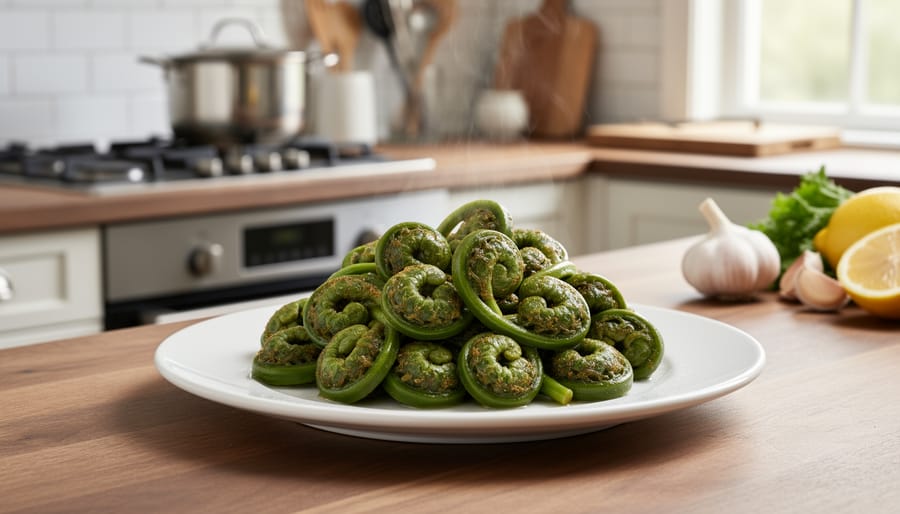
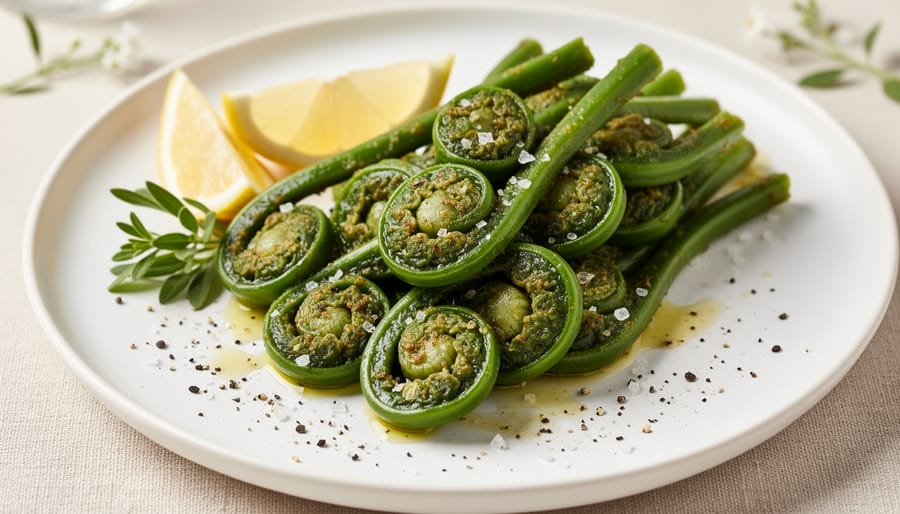
The simplest approach lets their unique taste shine: toss your tender fiddleheads with butter, minced garlic, and a squeeze of lemon juice. Add a sprinkle of sea salt and freshly cracked pepper, and you have an elegant side dish ready in minutes. This preparation works wonderfully alongside roasted chicken or grilled fish for a Memorial Day cookout.
For a more substantial dish, combine fiddleheads with spring garden veggies like asparagus, snap peas, and baby carrots. Sauté them together in olive oil with shallots and fresh herbs such as tarragon or chives. This colorful medley celebrates the season and makes a stunning centerpiece for your spring table.
Pasta lovers will appreciate fiddleheads tossed with linguine, cherry tomatoes, and a light cream sauce or bright lemon-butter finish. The fiddleheads add textural interest and a conversation-starting element that guests always remember.
For brunch gatherings, fold cooked fiddleheads into quiche filling along with caramelized onions and sharp cheddar. Their distinctive coiled shape creates visual appeal when arranged on top before baking. You can also nestle them into frittatas or scatter them over avocado toast for an Instagram-worthy presentation.
Fiddleheads also make thoughtful additions to grain bowls. Layer them over quinoa or farro with roasted beets, toasted nuts, and a tangy vinaigrette for a nourishing springtime lunch that feels both special and wholesome.
Making Fiddleheads Part of Your Eco-Friendly Holiday Menu
Choosing locally foraged fiddleheads for your spring holiday table is one of the kindest choices you can make for the planet. Because they grow wild in your region and require no shipping, packaging, or industrial farming, these little coiled fronds carry almost no carbon footprint from field to plate. When you serve them at your Earth Day brunch or Memorial Day gathering, you’re celebrating the season exactly as it arrives in your own backyard.
Plan your spring menu around what’s naturally available right now. Pair fiddleheads with other May and early June ingredients like asparagus, peas, and fresh herbs for a truly seasonal spread. You’ll reduce food waste by using every part of your ingredients and creating vegetable centerpieces from your market haul. Leftover cooked fiddleheads keep well in the fridge for three days and work beautifully in next-day frittatas or grain bowls.
This fleeting ingredient reminds us that eating sustainably means eating with the seasons. Set your table with eco-oasis ideas like reusable linens and foraged greenery, then let your just-picked fiddleheads take center stage. Your guests will taste the difference that fresh, local ingredients make while you celebrate spring’s generous, earth-friendly bounty together.
Fiddlehead season is one of spring’s fleeting joys, and now you have everything you need to bring this special ingredient safely to your table. Remember the simple steps: clean thoroughly, cook fully for 15 minutes boiling or 10-12 minutes steaming, and never eat them raw. These basics open the door to a delicious, locally sourced ingredient that connects you to the season and reduces your environmental footprint at the same time.
Whether you’re planning an Earth Day dinner, a Mother’s Day brunch, or a Memorial Day gathering, fiddleheads add that touch of springtime magic that guests will remember. There’s something truly satisfying about cooking an ingredient that grew wild just miles from your kitchen, celebrating the brief window when nature offers this curled green treasure.
This season, give fiddleheads a try. Visit your local farmers market, follow the safety steps you’ve learned here, and enjoy the unique pleasure of cooking a truly seasonal, sustainable ingredient that tastes like spring itself.


