
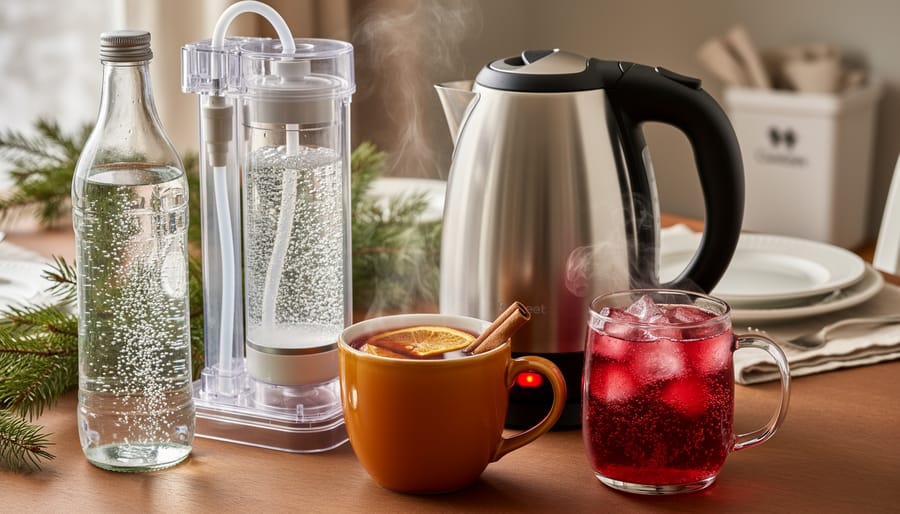
Sustainable beverage technologies are simply the tools and habits that let you make hot, cold, and bubbly drinks with less energy, less water, and far less packaging going in the trash. The good news is you don’t need a remodeled kitchen to start. A kettle with an auto shut-off, a few glass bottles, and a reusable carbonation setup can change how your holiday drink table works in a single afternoon.
Think about the drinks you reach for most when the weather turns. Mulled cider simmering on the stove, sparkling cranberry spritzers, iced herbal tea for guests who run warm. Each one can be made lighter on resources with the right method, whether that’s heating only what you’ll pour, chilling with reusable ice, or refilling a bottle instead of buying another can. Once you see where the waste usually hides, it’s easy to cut it without losing any of the cheer.
Below, we compare heating, chilling, and carbonation options side by side, then walk through a real-feeling drink station you can set up at home. You’ll also find reusable craft ideas, storage tips, and answers to common questions. If you’re planning a menu, our collection of cozy fall drinks pairs nicely with everything here, so you can fill your mugs and your conscience at the same time.
What Sustainable Beverage Technology Really Means at Home
Why Seasonal Drinks Deserve a Second Look
Holiday hosting has a way of multiplying everything at once. A quiet household that uses a few mugs a day suddenly pours drinks for a dozen guests, and the stack of plastic cups, bottled mixers, and kettles running on repeat grows right along with it. Even a lovely Thanksgiving table can end the night with a bin full of single-use cups and empty bottles.
That spike is exactly why small changes matter so much in busy gathering months. Swapping one disposable habit for a reusable one gets repeated at every party, and the savings add up fast. A few terms will come up as you plan:
- Induction heating
- A cooktop method that warms the pot directly with magnets, so less heat escapes into the room.
- Refillable carbonation
- A countertop machine that bubbles up your own water or juice using a reusable gas canister instead of bottled soda.
- Cold brew concentrate
- A strong, slow-steeped coffee or tea base you dilute to serve, which stores in one jar instead of many bottles.
- Compostable packaging
- Cups, lids, or wrappers designed to break down in a compost system, rather than sit in a landfill.
Keep these in mind as we look at the gear and habits ahead.
Energy-Smart Ways to Warm Up Cider, Cocoa, and Mulled Drinks
Keep It Hot Without Reheating
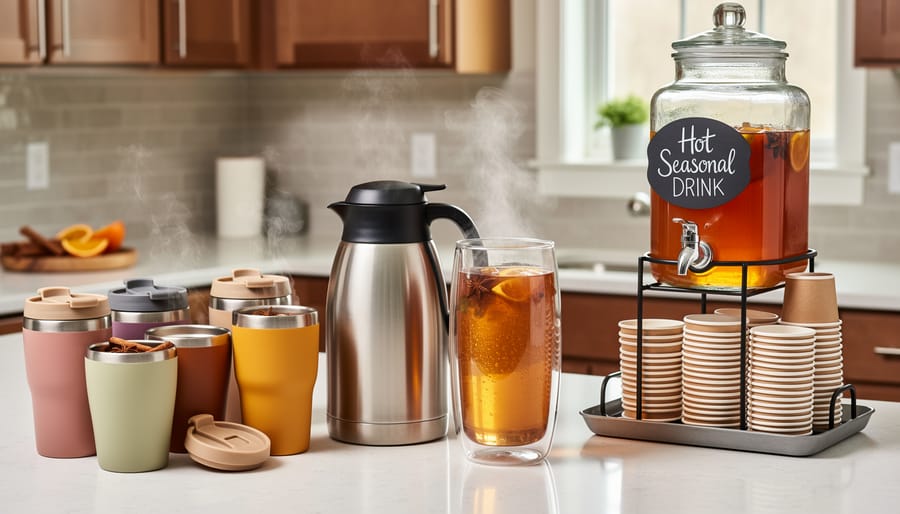
A vacuum-insulated carafe is the quiet hero of a big-batch drink. Once your cider or cocoa is steaming, pour it into a preheated carafe (rinse it with hot water first) and the heat stays put for hours. No more flicking the burner on and off, and far less leftover cider going cold and getting poured down the drain.
For a self-serve spread, set a thermal dispenser with a pump or spigot on the table so guests can top off their own mugs. Fill it only as full as you expect to serve, since a full vessel holds heat longest. Here’s how common heating methods stack up for getting a batch to temperature before it goes into the carafe.
| Heating method | Best use | Energy considerations | Ease of cleanup |
|---|---|---|---|
| Slow cooker | Mulled cider held at a gentle simmer | Low steady draw, best used on the warm setting | Removable insert, easy to rinse |
| Induction burner | Quick heat-up of a large pot | Heats the pot directly, so little wasted warmth | Smooth surface wipes clean |
| Stovetop pot | Small batches of cocoa or spiced milk | Fine for short heating, wasteful if left on | One pot to scrub |
| Insulated electric kettle | Hot water for tea or cocoa mixes | Heats only what you need | Rinse and dry the interior |
Heat once, hold it well, and your drinks stay cozy without the extra energy.
Chilled and Sparkling Drinks With Less Packaging
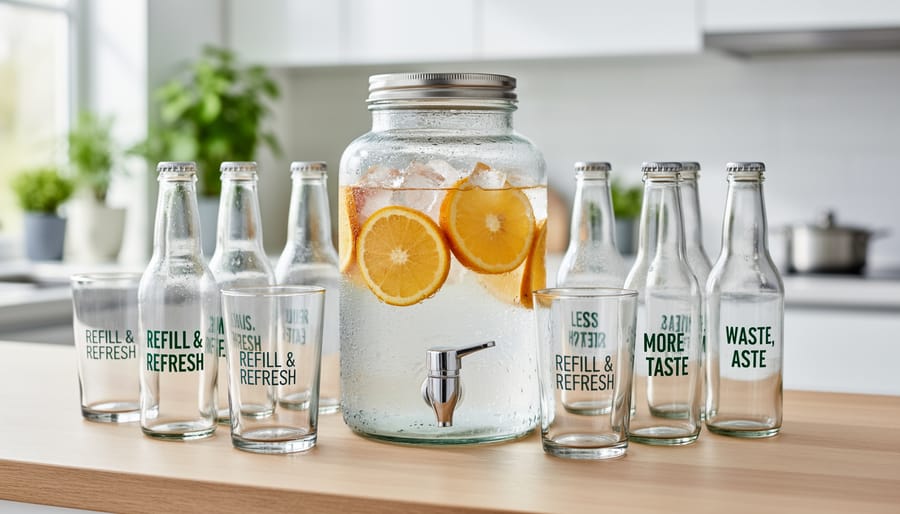
Not every festive drink needs to arrive in a bottle or a can. A few countertop tools can swap out a surprising amount of packaging, and they make the party feel a little more handmade, too.
Start with a refillable carbonation machine. You fill a reusable bottle with cold water, add a dose of CO2 from a cylinder you can usually exchange or refill, and press a button for fizz. From there, the fun part is stirring in cranberry syrup, a squeeze of citrus, or a splash of ginger concentrate. A countertop filtered water tap (or even a simple pitcher filter) makes the water itself taste crisp and clean, so your sparkling drinks don’t rely on bottled water at all.
For cold drinks with more depth, try bulk cold brew or concentrate. Steep a big jar of coffee or tea overnight in the fridge, then dilute it by the glass. One batch can serve a crowd, and a single jar replaces a whole stack of single-serve cans.
Here’s how the trade-offs stack up against buying bottled or canned drinks:
Pros
- You cut down dramatically on bottles, cans, and cartons headed for the recycling bin.
- Flavors are fully yours to customize, from lightly sweet to extra tart.
- Fizz is available on demand, so there’s no flat leftover soda.
- Over many gatherings, the per-glass cost often drops.
Cons
- The machine and extra bottles take up counter and cabinet space.
- You’ll need to plan ahead for CO2 refills or exchanges.
- Making syrups and concentrates takes a little prep time.
- The upfront purchase costs more than a single case of canned drinks.
If you’re hosting, set out a tray with the carbonation bottle, a few small jars of syrup, and a bowl of fresh citrus slices. Guests can mix their own sparkling creations, and you’ll end the night with far less to haul out to the curb.
Peek Inside a Low-Waste Drink Station
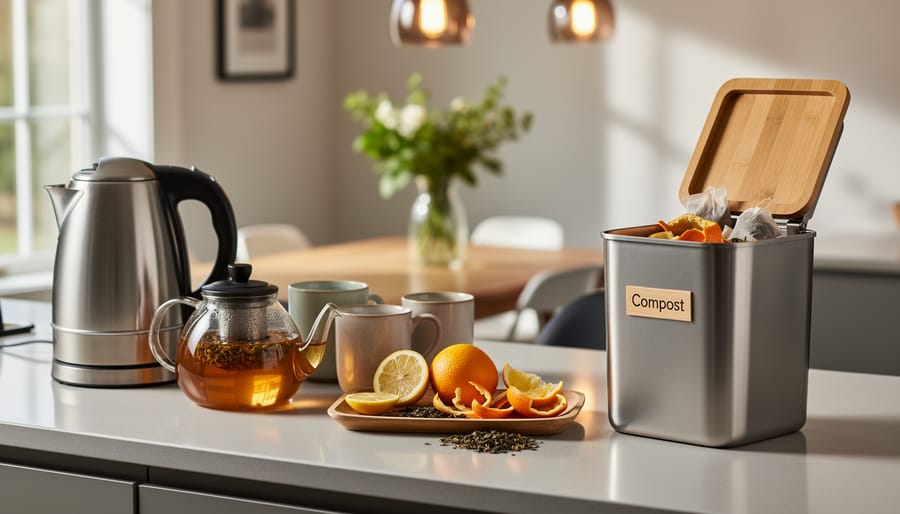
Step into the corner of a kitchen that smells like orange peel and warm cinnamon, and you’ll see how little it takes to build a low-waste drink station. Picture a narrow wooden console, maybe a repurposed sideboard or a rolling cart tucked beside the dining table. It’s the kind of spot that works just as well in a small apartment nook as in a roomy dining room.
On top sits a tall glass dispenser with a spigot, filled with spiced cider that glows amber in the afternoon light. Beside it, a smaller one holds ice water with floating cucumber and lemon rounds. Glass feels substantial in the hand and never leaves that faint plastic smell, so guests refill again and again instead of grabbing a fresh cup every time.
Above the cart, a row of small brass hooks holds a mismatched collection of mugs, some speckled stoneware, some thrift-store florals. Everyone picks a favorite, and a loop of ribbon or a little fabric tag on the handle keeps track of whose is whose. No stacks of paper cups, no guessing.
Down below, a lidded compost caddy waits for citrus peels, spent tea bags, and cinnamon stick ends. It’s a small enamel pail, easy to wipe clean, with a charcoal filter in the lid to keep things fresh. Next to it, a basket of folded cloth napkins in muted plaid replaces the paper kind, and a little tray holds a pitcher of filtered water for rinsing and topping off.
The refill station is the quiet hero here. A labeled jar of loose tea, a jar of honey with a wooden dipper, and a bottle of homemade syrup all stand ready, so topping up a pot never means opening another package. Little touches like dried orange slices and a few sprigs of rosemary add scent and color, and they pair nicely with the same harvest decor finds you might already have on the mantel.
Setting up your own version doesn’t call for new gear. Start with what you have, then add low-waste swaps one at a time, like loose tea for bagged or a refillable syrup bottle for store-bought mixers. The result feels welcoming first and sustainable second, which is exactly the point.
Seasonal Crafts That Make Your Drinks Feel Special

A little handmade charm goes a long way toward making a drink feel special, and the best part is that none of it ends up in the trash. A mug of cider with a dried orange slice floating on top, a cinnamon bundle tied with twine, a jar wrapped in a scrap of flannel: these small touches bring the season to the table and can be used again next year.
Dried orange slices are a lovely place to begin, and they’re forgiving for beginners and kids alike. Here’s how to make them:
- Heat your oven to its lowest setting, usually around 200°F.
- Slice oranges into rounds about 1/4 inch thick, then pat both sides dry with a clean towel.
- Lay the slices on a parchment-lined baking sheet in a single layer.
- Bake for two to three hours, flipping them once halfway through, until the edges curl and the centers feel dry.
- Let them cool completely on a rack, then store them in a jar with a loose lid until it’s time to garnish.
The kitchen will smell wonderful while they bake, which is half the fun.
While those dry, try a few more reusable ideas. Tie three or four cinnamon sticks together with kitchen twine or a strip of fabric, and tuck the bundle into a mug as a stirrer. For a cozy grip, sew or glue a simple fabric cozy around a mug or glass, which keeps hands comfortable and cuts down on paper sleeves. Mason jars become charming mugs when you wrap them in flannel or felt, held in place with a rubber band or a few stitches.
Finish with reusable drink tags. Cut small shapes from cardstock, scrap fabric, or thin wood, then write each guest’s name with a washable marker so you can wipe them clean and use them again. Kids will happily take over this one, and everyone leaves with a drink that feels a little more their own.
Smarter Storage and Leftover Rescue
Once the party winds down, the real magic is in how you handle what’s left. A few smart storage habits turn extra cider, tea concentrate, and syrups into tomorrow’s treats instead of tonight’s trash.
Start with the right containers. Glass jars and bottles with tight lids are ideal, since they don’t hold onto flavors and can be washed and reused for years. Cool your drinks fully before sealing, and leave a little headspace if you plan to freeze, because liquids expand. Label each jar with the contents and the date. A strip of masking tape and a pen is plenty.
As a general rule of thumb, homemade cider and tea concentrate keep best in the fridge for about three to five days, while simple syrups often last a week or two when kept cold. Freezing stretches things much further, though quality is best within a few months. Because recipes vary, follow trusted food-safety guidelines from your local extension service or a reliable food authority, and when something smells or looks off, let it go.
Now for the fun part, rescuing leftovers:
– Pour extra cider or cocoa into ice cube trays, then drop the cubes into sparkling water or a warm mug later.
– Simmer leftover juice or punch down gently into a thicker syrup for pancakes or yogurt.
– Toss spent citrus peels and apple cores into a pot with water and sugar for a quick fruit-scrap syrup.
– Freeze leftover brewed tea in cubes for iced tea that never gets watered down.
Each little rescue saves money, cuts waste, and makes your kitchen smell wonderful along the way.
Common Questions About Greener Seasonal Drinks
Do reusable cups really make a difference? Yes, especially at gatherings, where a single party can easily rack up dozens of disposable cups. A reusable mug gets washed and used again for years, and the savings add up fast. Pair them with a simple labeling trick, like fabric drink cozies or tags, so guests can keep track of their own cup and you’re not washing extras all evening.
How do I host a crowd without disposables? Start with a plan for the cups, then everything else follows. Borrow extra mugs from friends, pick up secondhand glasses, or set out a mix of mismatched ones for a cozy, collected look. Add a dispenser for cold drinks and a thermal carafe for warm ones so guests can refill themselves. Cloth napkins and a small bin for dishes by the sink keep the cleanup easy. If you’re planning a big menu, try pairing the drinks with your favorite seasonal recipes so the whole table feels thoughtful and connected.
Is sustainable gear worth the cost? It depends on how often you entertain and what you already own. A refillable carbonation machine or an insulated carafe tends to pay off if you use it every week, since you’re skipping bottled mixers and repeated reheating. If your budget is tight, start small: a few good mugs, a glass dispenser from a thrift shop, or a reusable straw set. You don’t have to buy everything at once. One thoughtful swap this season is a perfectly good place to begin.
What about leftovers? A little planning helps here too. Pour extra cider or tea concentrate into jars, freeze spare syrup in ice cube trays, and compost the citrus peels and spent tea leaves. That way, nothing goes to waste and the next gathering starts a step ahead.
Holiday drinks have always been about warmth, not waste. The simmering pot of cider, the mug that gets passed around, the little garnish that makes someone smile: these are the moments people remember, and none of them require a mountain of disposable cups.
That’s the beauty of Sustainable Seasonal Beverage Practices. They slip right into the traditions you already love. An insulated carafe keeps cocoa warm through the whole movie. A refillable carbonation system adds sparkle to punch without a stack of empty bottles. A compost caddy catches the orange peels and spent tea bags while you chat.
You don’t need to change everything at once. Pick one small swap this season, maybe real mugs instead of paper cups, or a big-batch warm drink that doesn’t need constant reheating. See how it feels. Chances are it’ll become part of your own tradition, one that’s a little cozier and a little kinder to the planet.
So fill your favorite mug, take a slow sip, and raise it to a greener holiday.