

A seasonal kitchen reset that deep cleans your dishwasher and refreshes your glassware takes about two hours and ensures your entertaining essentials sparkle through the busiest months ahead. Before the holiday season kicks into high gear, this preventive maintenance prevents cloudy glasses, funky odors, and surprise breakdowns when you’re hosting a crowd.
Think of this reset as preparing your kitchen’s workhorse for overtime. Your dishwasher handles countless loads during holiday gatherings, but mineral buildup, grease residue, and hidden debris gradually diminish its performance. At the same time, glassware that looked fine in summer might show streaks, spots, and cloudiness under the scrutiny of festive table settings.
The timing matters more than you might expect. Addressing these issues now, before you’re juggling meal prep and guest lists, means your wine glasses will gleam for every toast and your dishwasher will power through stack after stack of plates without hesitation. You’ll tackle everything from filter cleaning and spray arm inspection to proper glassware treatment, creating a kitchen that’s genuinely ready for the season’s demands. The reward? Peace of mind knowing your essential tools won’t let you down when it counts most.
Why Your Dishwasher and Glassware Need a Seasonal Reset
Think about the last time you hosted Thanksgiving dinner or a holiday party. You loaded the dishwasher with stack after stack of plates, only to open it and find water pooling at the bottom, dishes still greasy, or glasses emerging cloudier than when they went in. That’s the moment you realize you needed a guest-ready home, but your kitchen wasn’t quite prepared for the workload.
Key Takeaway: A seasonal kitchen reset prevents dishwasher breakdowns during peak entertaining times, ensures your glassware sparkles for guests, and gives you confidence that your kitchen can handle the busy weeks ahead without mid-party disasters.
Here’s why getting ahead of these tasks matters. Your dishwasher works harder during November and December than any other time of year. Months of mineral buildup, hidden food particles in the filter, and neglected spray arms can finally catch up when you need the machine most. Addressing these issues now, including using salt in your dishwasher correctly, means you won’t be hand-washing wine glasses at midnight while guests wait for dessert.
Your glassware tells its own story. Hard water stains and cloudiness don’t appear overnight. They accumulate gradually until suddenly your champagne flutes look dull under dining room lights. Taking time to restore clarity now means every toast looks as celebratory as it should.
The real benefit? Peace of mind. You’ll move through the busy season knowing your kitchen can keep pace with back-to-back dinners, weekend brunches, and impromptu gatherings without leaving you scrambling to fix problems that could have been prevented.
What You’ll Need for Your Kitchen Reset
Gathering your supplies before you start makes the entire process smoother and prevents those frustrating mid-project trips to the store. Most items you’ll need are probably already in your kitchen or laundry room, and the few specialty products you might need to buy are inexpensive and will last through multiple resets.
Here’s everything you’ll need to refresh your dishwasher and glassware:
- White vinegar (distilled works best for removing mineral deposits and odors)
- Baking soda (natural deodorizer and gentle abrasive for scrubbing)
- Dishwasher cleaner tablet or powder (optional commercial product for heavy buildup)
- Liquid dish soap (for hand-washing delicate glassware)
- Microfiber cloths (soft enough for wiping interior surfaces without scratching)
- Old toothbrush or small soft brush (perfect for cleaning spray arm holes and gasket grooves)
- Lint-free towels or microfiber glass cloths (for polishing glassware to a streak-free shine)
- Glassware polish or cleaner (optional, for restoring extra sparkle to special pieces)
The vinegar and baking soda combination tackles most dishwasher cleaning tasks naturally, dissolving mineral buildup and neutralizing odors without harsh chemicals. The soft brushes let you reach tight spots where grime hides, while microfiber materials won’t leave lint or scratches on glass surfaces. If your dishwasher hasn’t been deep cleaned in over six months or you have very hard water, a commercial dishwasher cleaner can provide extra cleaning power for that first seasonal reset.
Important Safety and Care Warnings

Before you dive into your kitchen reset, take a few minutes to set yourself up for success, and safety. This preparation ensures you protect both your appliances and your glassware while getting everything ready for the busy season ahead.
Start by locating your dishwasher’s manual or looking up the model online. Manufacturers often specify which cleaning products are safe for internal components, and some finishes require gentler approaches than others. Stainless steel interiors handle most cleaners well, but plastic tubs may discolor with certain chemicals.
Always let your dishwasher cool completely before cleaning. Reaching into a machine that recently ran a heated dry cycle can burn your hands, and hot surfaces make it harder to grip small parts like filters safely. Give it at least thirty minutes to cool down.
When handling delicate stemware, work over a towel-lined surface and grip glasses by the bowl, not the stem or rim. Even small chips weaken the entire piece, so set aside anything questionable rather than risk it shattering mid-party.
Skip harsh abrasives like steel wool or scouring powders on dishwasher interiors, they scratch surfaces and create places for grime to hide. Stick with soft brushes, cloths, and gentle scrubbing for everything except the filter, which can handle a bit more vigor.
If your dishwasher shows signs of mechanical issues, unusual noises, leaking, or failure to drain, call a professional before your deep clean. A seasonal reset can’t fix broken pumps or faulty seals, and attempting repairs without expertise may void your warranty.
Step-by-Step: Deep Cleaning Your Dishwasher
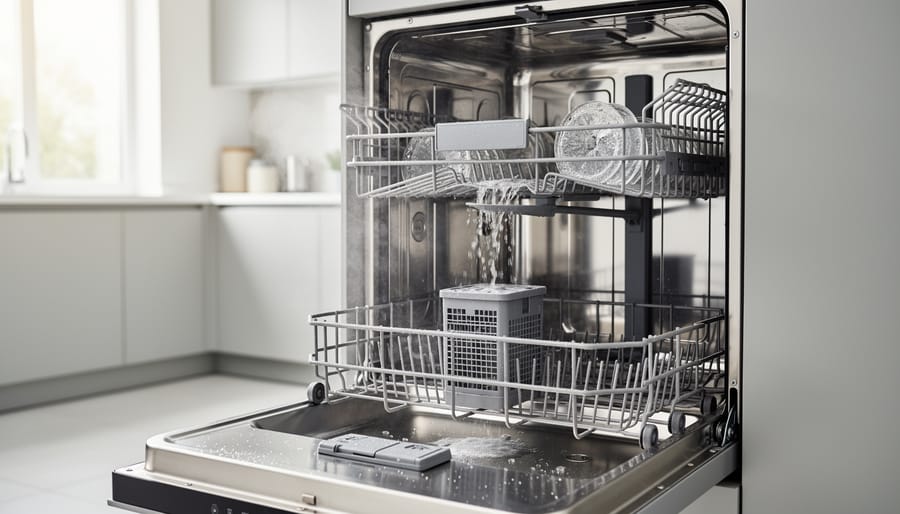
Clean the Filter and Drain
The filter sits at the bottom of your dishwasher, usually beneath the lower spray arm. Start by pulling out the bottom rack completely so you have clear access. Twist the cylindrical filter counterclockwise (most models) or lift the tab to remove it. You might find an outer coarse filter and an inner fine mesh filter that separate into two pieces.
Rinse both filters under warm running water, using a soft brush or old toothbrush to scrub away trapped food particles, grease, and the slimy buildup that accumulates over time. Pay special attention to the mesh where debris gets embedded. If the filter looks particularly grimy, soak it in warm soapy water for 10 minutes before scrubbing.
While the filter is out, check the drain opening underneath. Wipe away any visible debris with a damp cloth or paper towel. Food particles, broken glass, or small objects can collect here and block drainage. Once everything is clean and debris-free, reassemble the filter components and twist or snap them back into place until they lock securely. A properly seated filter is essential for effective cleaning performance.
Wipe Down Seals, Edges, and Spray Arms
After tackling the filter, turn your attention to the areas that quietly collect grime and affect your dishwasher’s efficiency. Start with the door gasket, that rubber seal running around the door opening. Grab a damp microfiber cloth and wipe it thoroughly, pulling back the folds to reach trapped food particles and mildew. These hidden spots prevent a proper seal and can cause leaks.
Next, inspect the spray arms. Remove them (they usually twist or snap off) and hold them up to the light. Check each tiny hole for clogs from hard water or food debris. Use a toothpick or thin wire to poke through blocked openings, then rinse under running water. Clogged spray arms mean dishes won’t get clean, no matter how good your detergent is.
Don’t forget the interior edges where the door meets the tub. Run your cloth along the bottom edge and corners where standing water sits, this is prime territory for slime buildup. A soft brush helps dislodge stubborn residue. These often-overlooked spots make a real difference in how your dishwasher performs during back-to-back entertaining loads.
Run a Deep-Clean Cycle
With the filter cleaned and seals wiped down, it’s time to tackle the interior buildup that hides in places you can’t easily reach. This deep-clean cycle works like a spa treatment for your dishwasher, dissolving months of mineral deposits, grease film, and lingering odors that regular dish loads leave behind.
Place a dishwasher-safe cup filled with two cups of white vinegar on the top rack. Run a complete hot water cycle without any dishes inside. The vinegar circulates through every spray arm, pipe, and crevice, breaking down hard water scale and cutting through soap scum that dulls your machine’s performance.
Once that cycle finishes, sprinkle one cup of baking soda across the bottom of the empty dishwasher. Run a short hot water cycle. This second pass neutralizes any remaining odors and gives the interior a final polish, leaving everything fresh and ready for your entertaining season.
If you prefer a commercial dishwasher cleaner, follow the package directions for an empty cycle. These products work similarly but often include additional degreasers. Either method works beautifully.
Your dishwasher should now smell clean rather than musty, and you’ll notice dishes coming out truly spotless. This thorough reset, combined with the storage hacks that keep your kitchen organized, sets you up perfectly for the busy months ahead when every load counts.
Step-by-Step: Refreshing Your Glassware Collection

Sort and Inspect Each Piece
Start by laying out all your glassware on a clean, well-lit counter where you can see every piece clearly. Natural light works best for spotting imperfections you might miss under cabinet lighting.
Pick up each glass individually and run your finger around the rim, chips feel sharp and can cut lips during toasts. Hold glasses up to the light and look for hairline cracks that could break mid-wash or mid-pour. These pieces need to go, no exceptions.
Check for cloudiness that won’t wipe away. If it’s permanent etching from hard water or too many dishwasher cycles, decide whether it’s worth keeping for everyday use or if it’s time to replace before guests arrive.
Set aside any wobbly stems or glasses with loose bases, they won’t survive a busy holiday party.
Remove Cloudiness and Hard Water Stains
Cloudy glassware doesn’t have to stay that way. Start with the vinegar soak method for most pieces: fill a basin with equal parts white vinegar and warm water, then submerge your glasses for 15-20 minutes. The acid gently dissolves mineral deposits without scratching. For stubborn white films, create a paste using three parts baking soda to one part water. Apply this directly to problem areas with a soft cloth, using gentle circular motions. Let it sit for two minutes before rinsing.
The rinsing step matters more than you’d think. Use hot water first to remove all residue, then finish with a cold rinse to close the glass pores and prevent new deposits from forming. Hold each glass up to natural light to check for streaks. If cloudiness persists after treatment, the glass may be permanently etched rather than just stained, a sign it’s time to replace those pieces before your gatherings begin.
For wine glasses with particularly stubborn rings, wrap a vinegar-soaked cloth around the bowl and let it work for five minutes before scrubbing gently.
Polish and Organize for Easy Access
Once your glassware is clean and dry, give each piece a final polish with a lint-free cloth or microfiber towel. Hold the glass up to natural light and buff away any remaining water spots or fingerprints using circular motions. This extra step makes glassware truly sparkle when guests arrive.
Now organize your collection strategically for the busy season ahead. Group glasses by type, wine glasses together, tumblers in their own section, champagne flutes in another. Place the glasses you’ll use most often (everyday water glasses, wine glasses) at eye level where they’re easy to grab. Store special occasion pieces higher up but still accessible.
Stack carefully to prevent chips. If you’re tight on space, use shelf risers to create layers without cramming glasses together. Leave a finger’s width between each glass to avoid contact damage.
Store stemware upright rather than hanging if possible, this prevents rim chips and dust settling inside the bowl. For glasses you won’t use for a few weeks, consider covering shelves with a clean kitchen towel to keep dust at bay. Your organized, sparkling collection is now ready for any gathering the season brings.
How to Know Your Reset is Complete
Your kitchen reset is complete when you can see, smell, and feel the difference. Run your hand along the dishwasher’s door gasket, it should feel smooth and clean, not grimy. Open the door and take a breath; you should smell nothing, or perhaps a faint clean scent, never musty odors or old food.
Check these success indicators:
- Dishwasher interior smells fresh with no lingering odors
- Spray arms spin freely when you rotate them by hand
- Filter is clean and properly seated in place
- Glassware holds light beautifully with no cloudy spots
- Dishes come out completely dry with no residue
- Water drains fully at the end of each cycle
Hold your best wine glasses up to the light. They should sparkle without streaks or film, ready for seasonal tablescapes and holiday toasts. If glassware still looks dull, repeat the vinegar soak and polish again with a completely dry cloth, dampness causes streaking.
Run one test cycle with a full load of dishes. Everything should emerge spotless and dry. If you notice spots or residue, your water might be especially hard; consider adding a rinse aid to the dispenser. A properly reset kitchen gives you confidence that your entertaining essentials will perform flawlessly when guests arrive.
Maintaining Your Reset Throughout the Season
Your seasonal reset isn’t a one-and-done task, it sets the foundation for smooth operation through your busiest entertaining months. During holiday season, run a maintenance cleaning cycle every three to four weeks to prevent buildup from constant use. A quick vinegar rinse (one cup in the bottom, run on hot) takes fifteen minutes and keeps your dishwasher fresh between deep cleans.
Between gatherings, wipe down door seals and check the filter weekly when you’re running multiple loads daily. This thirty-second habit catches debris before it causes drainage problems mid-party. Load glassware on the top rack only, spacing pieces so they don’t touch, this prevents chips and ensures proper water circulation for spotless results.
For your glassware, give each piece a quick inspection after washing. Cloudiness developing mid-season means hard water is winning; address it immediately with a vinegar soak rather than waiting until after the holidays. Store freshly washed glasses upside down on clean shelf liner to prevent dust between uses.
Mark your calendar now for the next seasonal reset in early spring, after entertaining season winds down. This rhythm, deep clean before busy months, maintain during, refresh after, keeps your kitchen running beautifully year-round without last-minute panic or expensive repairs.
Common Questions About Seasonal Kitchen Resets
How often should I deep clean my dishwasher?
Run a deep-clean cycle every three to four months under normal use, or monthly during heavy entertaining seasons. If you notice odors, cloudy dishes, or slow draining between scheduled cleanings, do an extra cycle right away.
Are commercial dishwasher cleaners better than vinegar and baking soda?
Both work well for different purposes. Commercial cleaners are formulated for heavy buildup and mineral deposits, while vinegar and baking soda handle regular maintenance effectively at a fraction of the cost. Many people alternate between them.
Can I rescue vintage glassware that has turned permanently cloudy?
If the cloudiness is from hard water deposits, a vinegar soak can often restore clarity. However, if the glass has etching (permanent damage from harsh detergents), the cloudiness can’t be reversed, though proper care prevents further deterioration.
How do I know if my glassware is dishwasher safe?
Check for a dishwasher-safe symbol on the bottom (usually looks like dishes under water droplets), or look up the manufacturer’s care instructions. When in doubt, hand wash delicate pieces, especially vintage, crystal, or hand-painted glassware.
When should I schedule my kitchen reset before the holidays?
Aim for late October or early November, giving yourself at least three to four weeks before your first major gathering. This timing lets you address any issues you discover and ensures everything performs perfectly when guests arrive.
What if my dishwasher still smells after cleaning?
Check the garbage disposal if your dishwasher drains into it, as odors can travel between the two. Also inspect the filter again for trapped food particles, and ensure the drain hose isn’t kinked or clogged.
These questions come up repeatedly because timing and methods matter when preparing for busy entertaining months. Getting these details right now means you won’t scramble later when guests are on their way and you need everything working flawlessly.
Taking an hour or two now to reset your dishwasher and glassware saves you from mid-party panic when your machine stops draining or your wine glasses come out cloudy. You’ve got time right now, before the calendar fills with dinners, overnight guests, and holiday celebrations, to make sure everything works beautifully when you need it most.
This isn’t about perfection. It’s about creating a kitchen that supports you during the busiest, most joyful weeks of the year. When your dishwasher hums efficiently and your glassware sparkles under the light, you can focus on what matters: the people gathered around your table and the memories you’re making together. Your future self will thank you.