
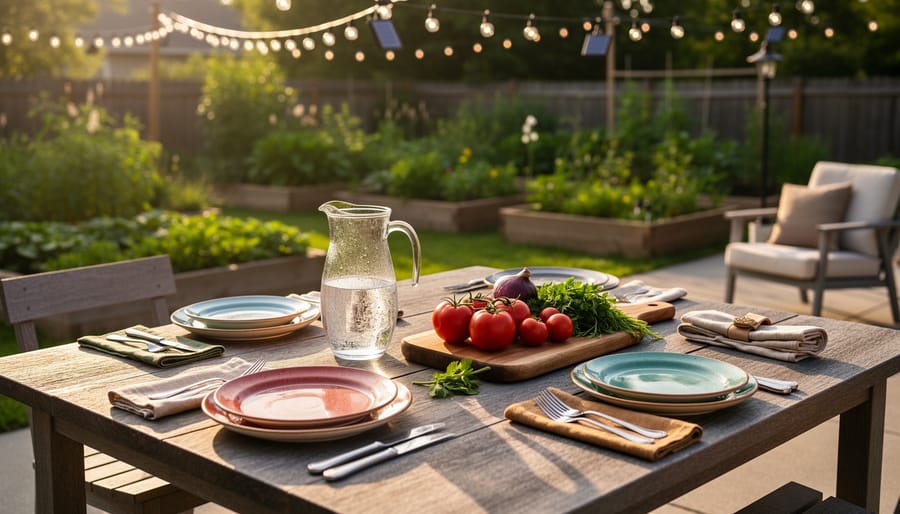
Hosting friends and family outdoors doesn’t mean choosing between a great party and protecting the planet. The best sustainable practices for outdoor entertaining combine reusable serving ware, seasonal local food, energy-efficient lighting, and thoughtful waste management to create memorable gatherings that leave minimal environmental impact. These eight practical strategies work individually or together, letting you start with what fits your budget and space, whether that’s swapping disposable plates for vintage dishes from your cupboard or creating an eco-friendly patio setup with secondhand furniture.
The beauty of sustainable outdoor entertaining is that many practices actually enhance the experience. Fresh tomatoes from the farmers market taste better than imported ones. String lights powered by solar panels create the same cozy glow without extending your electric bill. Cloth napkins feel more special than paper. You’re not sacrificing quality or fun, you’re often upgrading both while reducing waste, supporting local growers, and modeling choices that guests notice and appreciate. Small shifts add up quickly, turning your backyard into a space where good times and good stewardship go hand in hand.
How We Selected These Sustainable Practices
We chose these eight sustainable practices based on three essential criteria that make them worth your time and effort. First, accessibility: every practice works for average homeowners without requiring expensive equipment, specialized knowledge, or major lifestyle overhauls. Second, real environmental impact: each one meaningfully reduces waste, conserves resources, or lowers your carbon footprint beyond just feeling good about the effort. Third, they enhance rather than diminish the entertaining experience, because sustainability shouldn’t mean sacrificing the warmth and joy that brings people together around your outdoor table.
These practices also needed to work across different outdoor settings, whether you’re hosting on a small apartment balcony, a suburban patio, or a spacious backyard. We focused on changes you can implement gradually, starting with one or two at your next gathering rather than demanding a complete transformation overnight.
1. Switch to Reusable or Compostable Tableware

Ditching disposable plates and cups might be the single most impactful swap you can make. Real dinnerware transforms the entire experience, there’s something deeply satisfying about the weight of a proper plate in your hand, the gentle clink of glasses as friends toast across the table. Your food actually tastes better on ceramic than foam.
Start building your outdoor collection gradually. Hit up estate sales and thrift stores for mismatched vintage plates that add character. Look for durable melamine or bamboo fiber sets designed for outdoor use, they won’t shatter on patio concrete but feel substantial. Six place settings get you started; add more as your entertaining grows.
If you’re hosting larger crowds and need disposables, commit to truly compostable options. Read labels carefully: “biodegradable” means little without proper conditions. Look for ASTM D6400 or BPI certification, which guarantees commercial compostability. Bamboo, palm leaf, and sugarcane fiber plates break down completely and handle hot foods beautifully. They cost more upfront than plastic, but what you’re buying is guilt-free entertaining.
Store outdoor dinnerware in stackable bins near your entertaining space, maybe the garage or a deck storage bench. Keep sets together with rubber bands or mesh bags so you’re not hunting for matching pieces when guests arrive.
Pair your sustainable tableware with edible centerpieces for a completely thoughtful, waste-conscious table that still feels abundant and welcoming.
2. Create a Seasonal, Locally-Sourced Menu
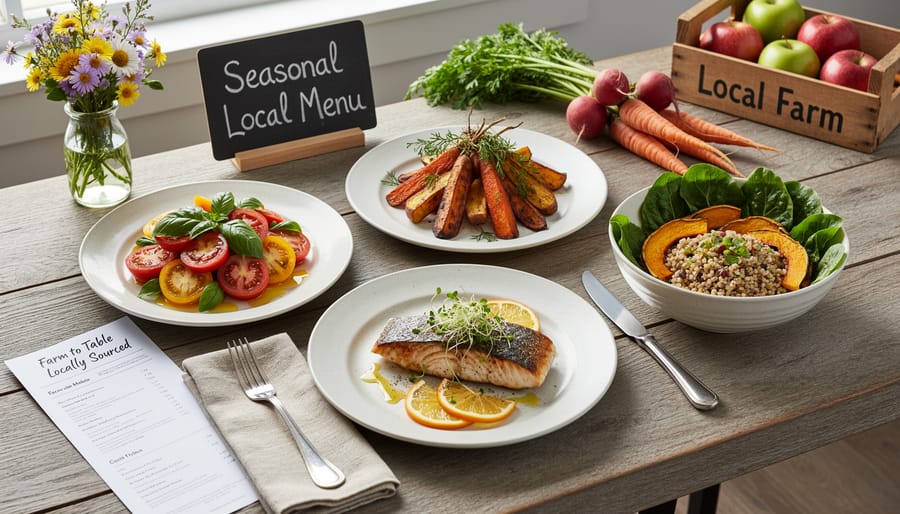
Planning your menu around what’s growing nearby sounds simple, but it’s one of the most impactful changes you can make. When you choose ingredients from local farms, you’re cutting out thousands of transportation miles and the refrigeration that goes with them. But here’s the bonus that makes this practice stick: seasonal produce at its peak actually transforms your cooking.
Start by finding farmers’ markets within a 20-minute drive of your home. Most vendors are happy to chat about what’s coming in the next few weeks, which helps you plan gatherings around ingredient availability rather than fighting against it. Many farms also offer CSA boxes or allow you to order ahead for larger events, giving you first pick of their harvest.
The taste difference is dramatic. A tomato picked yesterday and driven 15 miles tastes nothing like one shipped cross-country while still green. Your guests will notice, even if they can’t quite place why the food seems more vibrant. Summer brings sweet corn and stone fruits, fall delivers squash and apples, spring offers tender greens and early berries:
- Summer: tomatoes, zucchini, berries, stone fruits, fresh herbs
- Fall: apples, pears, squash, root vegetables, late-season peppers
- Spring: asparagus, strawberries, peas, leafy greens, radishes
Build your menu backward from what’s abundant rather than hunting for out-of-season ingredients. If peaches are everywhere in August, make them the star of your dessert and a grilled side dish. This approach often costs less too, since you’re buying what farmers have plenty of rather than paying premium prices for scarcity.
3. Set Up a Simple Composting Station for Food Scraps
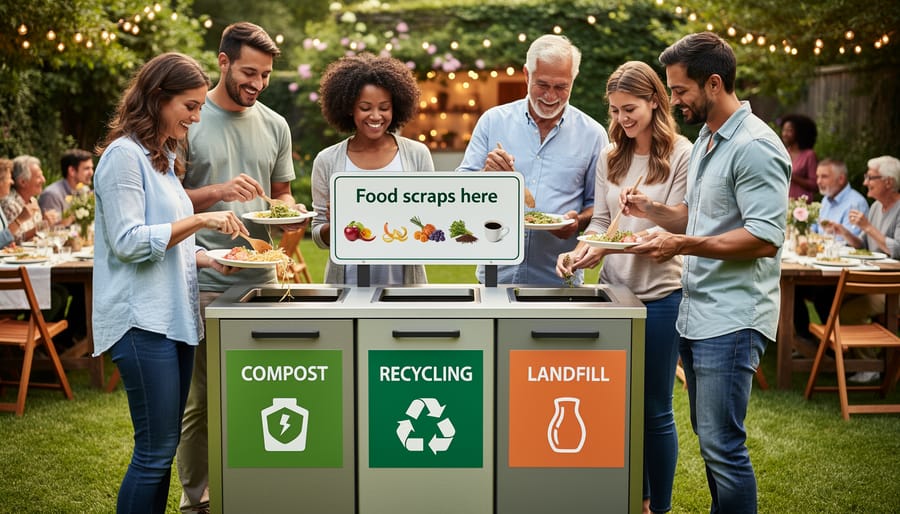
Setting up a composting station at your outdoor gathering sounds intimidating, but it’s actually one of the easiest sustainable swaps you can make. Choose a container with a lid, a small galvanized steel bucket or ceramic crock works beautifully and looks intentional rather than utilitarian. Place it on a side table near your serving area with a simple sign: “Fruit peels, veggie scraps, coffee grounds welcome here.”
Your guests can toss in plate scrapings, napkins if they’re unbleached paper, cores from those gorgeous vegetable centerpieces and herb stems. Skip meat, dairy, and oily foods at parties since those attract pests and create odors. A small chalkboard sign listing what’s welcome helps guests feel confident about participating.
The key to odor control is layering. Keep a small container of dried leaves or shredded newspaper nearby and add a handful after each deposit. This absorbs moisture and prevents that sour smell that makes people avoid compost bins. Empty your party bucket into your main compost pile or bin within a day or two.
If you don’t have a backyard composting system yet, many cities offer compost pickup services, or you can freeze scraps and drop them at a farmers market collection point. The station itself becomes a conversation starter, people are genuinely curious about composting once they see how simple and tidy it can be.
4. Use Solar or LED Lighting for Ambiance
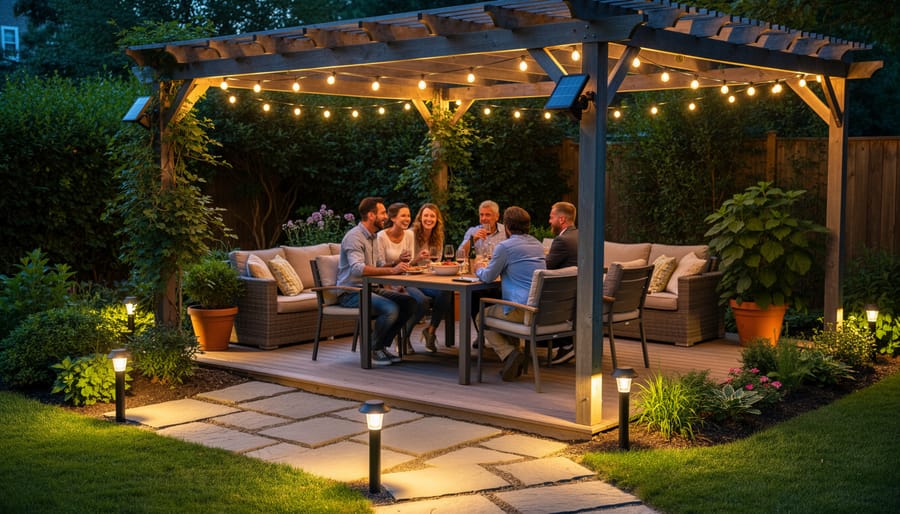
Outdoor lighting sets the mood for evening gatherings, and switching to solar or LED options means you can create that magical ambiance guilt-free. Solar string lights have come a long way from the dim, disappointing versions of a decade ago. Modern solar lights produce a warm, steady glow that rivals traditional incandescent bulbs, charging throughout the day and automatically illuminating when dusk falls. You’ll find options ranging from delicate fairy lights to larger Edison-style bulbs, all powered entirely by the sun. The best part? No extension cords snaking across your patio, no hunting for outdoor outlets, and zero added cost to your electric bill.
LED lanterns offer another beautiful, energy-efficient choice. Battery-powered LED lanterns consume a fraction of the energy of traditional bulbs and last for hours on a single charge. Many rechargeable models can be used gathering after gathering, eliminating disposable battery waste. Place them on tables, hang them from shepherds’ hooks, or cluster them on steps for pools of inviting light. The soft, flickering LED candle versions create an authentic candlelight feel without fire hazards or melted wax cleanup.
The upfront cost of quality solar and LED lighting pays for itself surprisingly quickly. Calculate what you’d spend on replacing traditional bulbs and the electricity to run them through a season of entertaining, and most solar setups break even within a year. After that, it’s purely savings. Plus, solar lights require almost no maintenance once installed, just an occasional wipe of the solar panel to keep them charging efficiently.
5. Grow Your Own Garnishes and Herbs
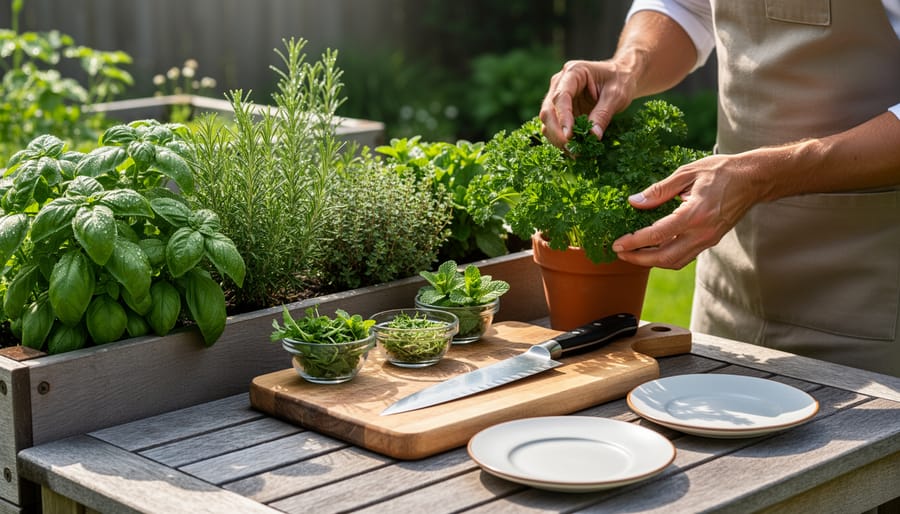
Nothing beats plucking fresh basil from a pot on your deck just before tossing it into a summer salad, or snipping mint sprigs for mojitos while guests watch. Growing your own garnishes transforms your outdoor entertaining from ordinary to exceptional while eliminating plastic-wrapped herb packages that wilt in your fridge.
Start with the basics: mint, basil, rosemary, and thyme thrive in containers and require minimal experience. A sunny spot on your patio and consistent watering are practically all they need. Mint grows so enthusiastically you’ll want to keep it contained (it spreads aggressively in garden beds), while basil loves warmth and rewards frequent harvesting with bushier growth.
For drinks and desserts, edible flowers add visual drama with zero effort. Nasturtiums offer peppery blooms in vibrant oranges and yellows, while violas and pansies bring delicate sweetness. Freeze them in ice cubes for stunning presentation, or float them in punch bowls. Lavender works beautifully in lemonade and cocktails, and the plants look gorgeous even when you’re not entertaining.
Container gardening works perfectly for small spaces. Cluster herb pots near your outdoor dining area so they’re within arm’s reach during meal prep. Terra cotta pots breathe well for herbs, but any container with drainage holes works. Group plants with similar water needs together.
The real magic happens when guests taste the difference. Fresh cilantro tastes brighter, rosemary smells more aromatic, and that just-picked quality elevates even simple dishes into something memorable and distinctly yours.
6. Implement a Clear Recycling and Waste System
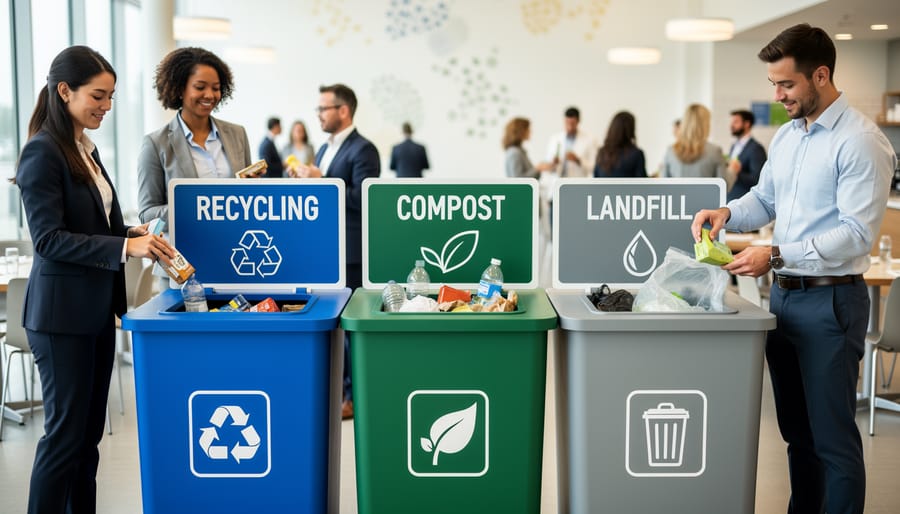
The difference between a sustainable gathering and a recycling bin full of contaminated waste often comes down to clear signage and strategic placement. When guests want to do the right thing but aren’t sure where items belong, they’ll either guess wrong or ask you repeatedly, neither of which makes for a relaxed party atmosphere.
Start by setting up three distinct stations in high-traffic areas where people naturally dispose of things: near the food table, by the outdoor bar or beverage area, and along the path back to the house. Use containers that look different from each other, color-coding works brilliantly, but even varying sizes or shapes helps guests distinguish at a glance. Large, simple labels at eye level matter more than you’d think. Skip the tiny symbols and write plainly: “Recycling: Clean bottles and cans only,” “Compost: Food scraps and napkins,” and “Trash: Everything else.”
The trickiest part of party waste isn’t what people throw away, it’s what they put in the wrong bin with good intentions:
- Pizza boxes with grease stains belong in trash, not recycling
- Paper napkins and plates go in compost, not recycling
- Plastic cups marked “compostable” need compost bins, not recycling
- Bottle caps should stay on bottles for recycling
- Aluminum foil only recycles if it’s clean and balled up
Place your recycling station closest to where drinks are served since bottles and cans make up the bulk of recyclables at gatherings. A simple trick: keep a small example of acceptable items on top of or next to each bin so people can match what they’re holding. This visual reference eliminates guesswork and keeps your systems running smoothly while you’re busy being the host rather than the waste monitor.
7. Choose Reusable Fabric Napkins and Tablecloths
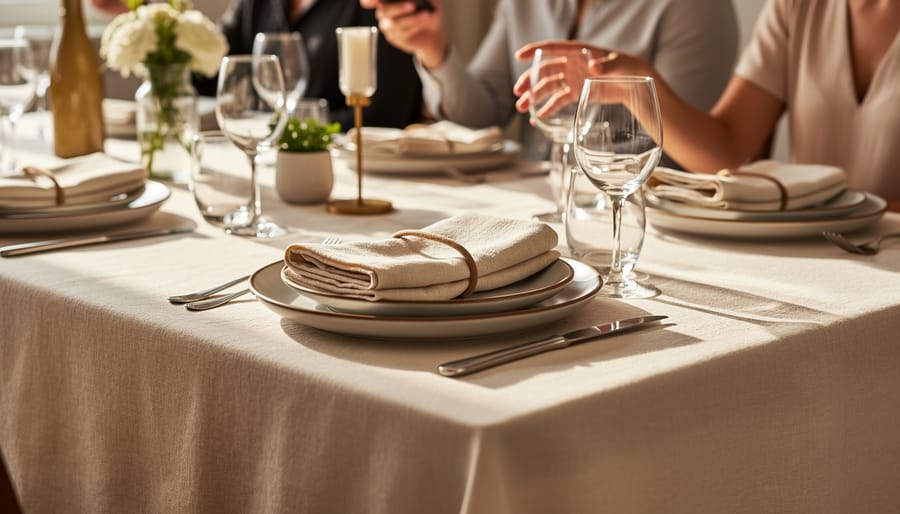
Cloth napkins and tablecloths transform your outdoor table from functional to refined while eliminating stacks of paper waste. A single fabric napkin replaces hundreds of paper ones over its lifetime, and unlike their disposable counterparts, linens get softer and more beautiful with each wash.
Start your collection with neutral tones like cream, gray, or natural linen that work across seasons and occasions. These versatile shades let you layer in seasonal colors through flowers, candles, or runners without needing multiple complete sets. Six to eight napkins and one or two tablecloths cover most gatherings, and you can build from there as your entertaining style evolves.
The care is simpler than you’d think. Shake out crumbs, treat any stains with a quick spray, and toss everything in the wash. Most outdoor entertaining messes come from food and drinks that release easily in cold water. Line-drying in the sun naturally bleaches white linens and saves energy, though a quick tumble works fine too. The slight wrinkles that come with linen actually add to the relaxed, organic feel perfect for outdoor settings.
Fabric linens anchor your table and make guests feel genuinely welcomed. There’s something about the weight and texture of real cloth that signals you’ve put thought into the gathering. As seasons change, swap your neutral base with different napkin rings, fresh herb sprigs tucked into folds, or a seasonal runner down the center. The investment pays for itself within a year while creating tablescapes that no paper product can match.
8. Serve Drinks from Pitchers and Dispensers
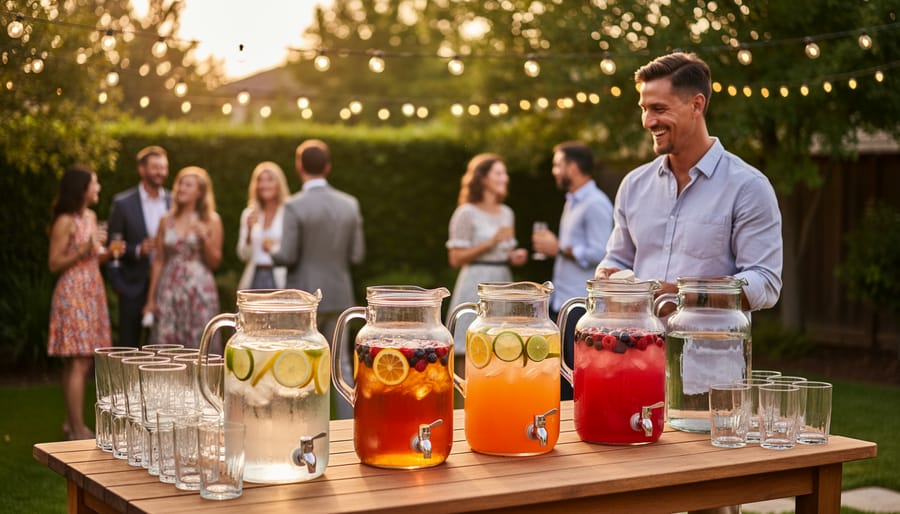
Switching to pitchers and dispensers transforms your beverage service while cutting down dramatically on packaging waste. Instead of individual bottles and cans that pile up in recycling bins, you’re serving drinks in a way that eliminates most of that single-use material.
Large glass dispensers look beautiful on any table and let guests help themselves to infused waters, lemonade, or batch cocktails. You can prep everything ahead of time, which means more mingling and less playing bartender all evening. Iced tea stations, cucumber mint water, or a signature sangria all work perfectly in dispensers with spigots. For your summer backyard resort vibe, consider multiple dispensers with different options so there’s something for everyone.
The ice situation deserves attention. Rather than filling drinks with cubes that water everything down, freeze fruit or herbs into larger ice blocks that melt slowly. Citrus wheels, berries, or whole herb sprigs frozen in bundt pans or loaf pans keep drinks cold without dilution. These also double as gorgeous presentation elements.
Batch cocktails work especially well. A margarita pitcher serves eight to ten people with ease. Mix the spirits, citrus, and sweetener ahead, then add ice and fresh garnishes just before serving. You save glass bottles, aluminum cans, and all those tiny plastic mixers while creating drinks that taste fresher than anything pre-bottled.
Making Sustainable Entertaining Your New Normal
The beauty of these sustainable practices is how naturally they become part of your entertaining routine. That first gathering might require a bit of planning, but by your third or fourth event, reaching for cloth napkins or setting up the composting station feels as automatic as arranging the chairs.
Start with the practices that excite you most. Maybe you’re already growing herbs and can’t wait to clip fresh basil for your cocktails. Or perhaps the idea of never buying plastic cups again speaks to your soul. Choose two or three changes for your next gathering, then add another practice when you’re ready. There’s no deadline for becoming the perfect sustainable host.
You’ll likely discover these choices save money too. Those solar lights pay for themselves within a season. Your cloth napkin collection lasts for years. The pitcher of homemade sangria costs less than individual bottles.
Here’s the thing: your guests notice. They go home thinking about their own habits, inspired by how effortless you made sustainability look. Your backyard gathering becomes a gentle nudge toward change that reaches far beyond your patio.
Frequently Asked Questions
Won’t switching to sustainable practices cost me more money?
Many sustainable practices actually save money over time. Reusable dinnerware, cloth napkins, and LED lighting have upfront costs but eliminate repeated purchases of disposables and reduce electricity bills. Growing your own herbs and buying seasonal produce locally often costs less than imported or out-of-season options.
What should I do if guests don’t follow my recycling and composting systems?
Clear, simple signage with pictures makes a huge difference. Position yourself near the stations early in the gathering to gently guide the first few guests, and others will follow their lead. Most people want to do the right thing when it’s obvious what that is.
Do compostable plates and utensils actually break down, or is it greenwashing?
Look for products certified by BPI (Biodegradable Products Institute) or labeled compostable to ASTM D6400 standards. These will break down in commercial composting facilities, though many won’t decompose in backyard compost bins. If you don’t have access to commercial composting, truly reusable options remain the better choice.
Which practice should I start with if I’m completely new to sustainable entertaining?
Begin with whichever change feels easiest for your situation. Switching to reusable tableware or setting up a simple recycling station are straightforward first steps that make immediate impact without requiring new skills or significant investment.
Can I realistically maintain these practices year-round, or are some seasonal?
Most practices work in any season with minor adjustments. Solar lighting performs best in summer but LED options work year-round. Your herb garden might move indoors during winter, and seasonal menus naturally shift with what’s available. The core habits remain consistent regardless of weather.
These questions come up repeatedly when people first consider sustainable entertaining, and the answers reveal something important: the barriers are usually smaller than we imagine. The cost concern fades when you calculate what you currently spend on paper plates and plastic cups for a single season. The guest behavior worry disappears with a few simple visual cues. The effectiveness doubt resolves with proper product selection.
Starting small removes the pressure of perfection. Your first gathering might feature reusable plates but store-bought beverages. The next one could add a composting bin. Gradually, these choices become automatic rather than deliberate, woven into how you naturally prepare for guests. The practices support each other too, once you’re growing herbs, using them as drink garnishes feels obvious. When you’ve invested in nice cloth napkins, you’re more inclined to complete the table with real dishes.