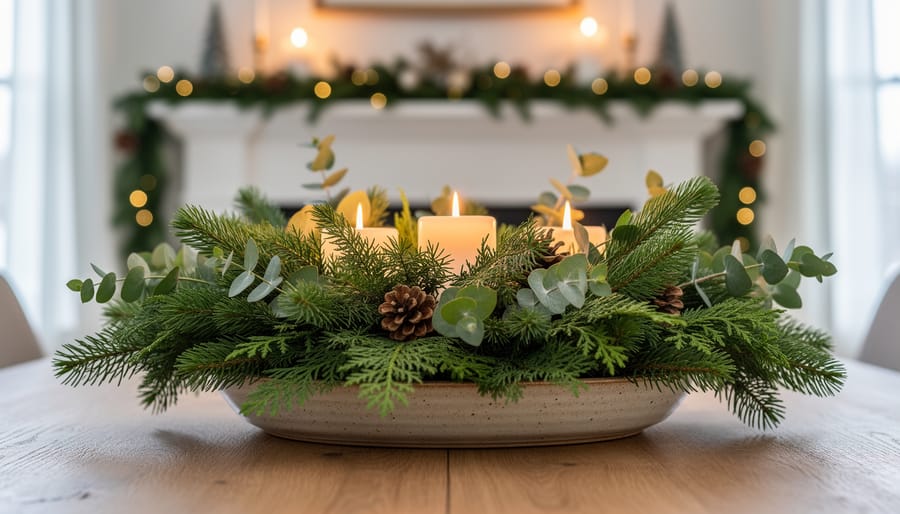
The best time to buy and arrange holiday greenery is early to mid-December, when fresh materials arrive at nurseries and florists and you can still enjoy them through New Year’s. If you’re decorating for Thanksgiving or want arrangements that last into January, timing shifts based on what you choose and how you care for it.
Fresh holiday greenery transforms your home with texture, scent, and natural beauty that artificial decor simply can’t match. The fragrance of pine and cedar mingles with the warmth of candlelight, while evergreen boughs frame doorways and mantels with effortless elegance. But timing matters more than most people realize. Buy too early and your carefully crafted arrangements may look tired by Christmas morning. Wait too long and you’ll face picked-over selections at premium prices.
The window for sourcing fresh greenery opens earlier than you might expect. Many growers harvest and ship materials from late November through mid-December, meaning local suppliers receive their best selection in waves throughout the season. Understanding when different varieties arrive, how long each type stays fresh, and when to schedule your assembly projects takes the guesswork out of holiday decorating. Whether you’re planning a simple wreath for the front door or elaborate garlands winding up your staircase, knowing the timeline helps you work smarter and enjoy arrangements that look vibrant for weeks rather than days.
Quick Answer: Best Timing for Holiday Greenery Arrangements
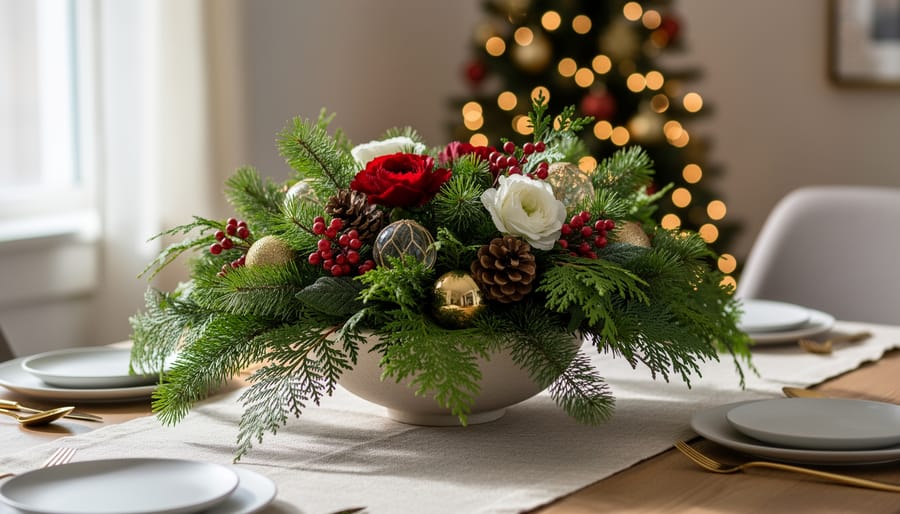
The sweet spot for creating most holiday greenery arrangements is about one to two weeks before you want them at peak display. For Thanksgiving centerpieces, assemble them two to three days before your gathering. For Christmas decorations, mid-December (roughly December 10-15) gives you fresh, vibrant arrangements that will carry through the holiday week and beyond.
Your climate plays a bigger role than you might expect. If you live somewhere warm or keep your home toasty, plan to assemble arrangements closer to your display date. A cooler home with moderate humidity extends freshness by a week or more.
For arrangements that bridge multiple celebrations, create them in stages. Start with a Thanksgiving display using the sturdiest greens, then refresh or rebuild around December 15 for Christmas, and swap out tired pieces between Christmas and New Year. This staged approach beats trying to stretch a single arrangement across six weeks.
The real secret is matching your timeline to how you’ll use the space. A formal dining room centerpiece for one special dinner needs different timing than an entryway arrangement greeting guests all season long. Think about your actual holiday schedule, then work backward from your key gathering dates.
Holiday Greenery Timeline: From Thanksgiving Through New Year
Early Season Arrangements (Thanksgiving to Early December)
For Thanksgiving through early December, you’re working with the longest display window of the holiday season, potentially three to four weeks if you time it right. The key is choosing hardy greens that won’t drop needles or brown out before your main holiday celebrations even begin.
Start assembling Thanksgiving arrangements the weekend before the holiday, around November 20-23. This gives you fresh centerpieces for your holiday table without risking tired-looking greens by mid-December. Cedar, white pine, and fir branches are your best choices here, they maintain their appearance for 3-4 weeks indoors with proper care. Skip the delicate varieties like noble fir or hemlock tips, which fade faster and won’t make it to Christmas looking fresh.
If you want greenery that bridges both holidays, create your arrangements during the first week of December. You’ll catch the tail end of Thanksgiving’s cozy aesthetic while ensuring everything still looks vibrant through December 20th. Magnolia leaves, boxwood, and Douglas fir are champions for this extended timeline. Their waxy coatings resist drying, and they actually improve visually as they settle into the arrangement.
Consider making two separate sets: simple Thanksgiving displays you’ll compost after the holiday, then fresh December arrangements. This approach eliminates the pressure of choosing greens that last five weeks, and you’ll enjoy prime freshness for both celebrations rather than compromising with mediocre middle-ground timing.
Peak Holiday Displays (Mid-December Through Christmas)
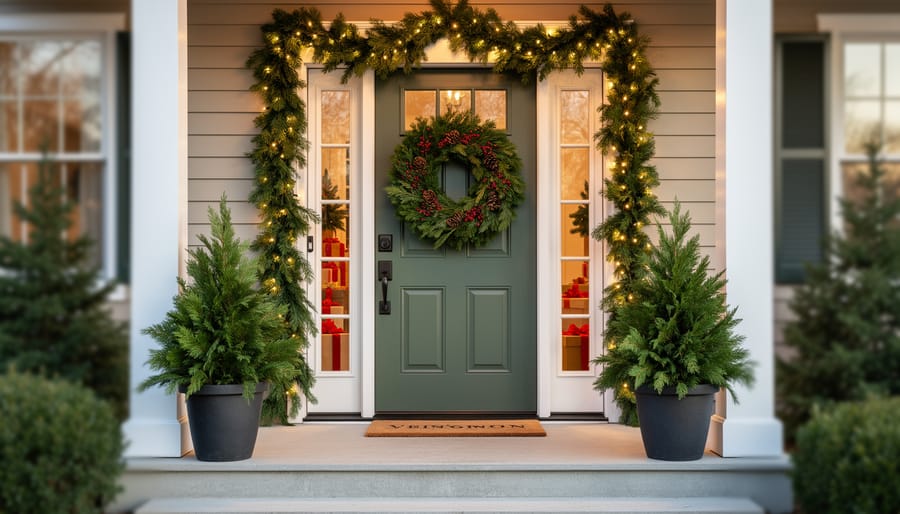
The week leading up to Christmas is when your greenery arrangements should hit their stride. Plan to create or refresh your main displays between December 18th and 21st, this timing ensures peak freshness during the actual holiday while accounting for the chaos of last-minute shopping and cooking.
If you’re hosting Christmas Eve or Christmas Day gatherings, assemble centerpieces and mantel arrangements two to three days before guests arrive. This gives you breathing room to handle other preparations while keeping your greenery looking crisp and fragrant when people walk through the door. Fresh-cut pine, fir, and cedar will easily hold their beauty for five to seven days with proper care, covering you through Boxing Day.
For a natural look that complements cozy farmhouse decor stick with simple arrangements that take 30 to 45 minutes to assemble. Elaborate designs with dozens of elements need earlier assembly, tackle those on December 17th or 18th to avoid holiday-week stress.
Keep pre-cut bundles wrapped in damp newspaper in a cool garage or mudroom if you need to shop early. Most grocery stores and markets restock fresh greenery December 20th through 22nd, so you can still find quality materials even if you’re running behind schedule. The key is matching your assembly day to when your home will be fullest, not necessarily to the calendar date of Christmas itself.
Extended Season (Post-Christmas to New Year)
Most greenery that looked vibrant on Christmas Day starts showing fatigue by December 27th or 28th, but you’ve still got New Year celebrations ahead. Instead of letting tired arrangements limp along, this is the perfect moment to refresh or simplify. Pull out the most worn stems, usually the ones closest to heat sources or with the thinnest needles, and tighten up what remains. You’ll be surprised how much fresher a half-sized arrangement looks compared to a full-but-wilting one.
If you’re hosting for New Year’s Eve, consider creating one or two small new centerpieces using the sturdiest leftover branches combined with white flowers, silver accents, or metallic ribbon for a transitional feel that doesn’t scream “Christmas leftover.” Hardy greens like boxwood, cedar, and eucalyptus often look nearly perfect a week after Christmas if they’ve been misted daily. These can easily carry you into the first week of January, when you might shift toward January arrangements that feel lighter and less holiday-specific.
What Affects How Long Your Greenery Stays Fresh
Climate and Indoor Conditions
Your home’s climate plays a bigger role in greenery longevity than most people realize. Central heating is the main culprit behind dried-out arrangements. Furnaces and forced-air systems pull moisture from both the air and your fresh cuttings, causing needles to brown and drop within days if you’re not careful. Homes kept at 68-72°F will see faster drying than cooler spaces. If you blast the heat, plan to assemble arrangements closer to your actual holiday gathering rather than a week or two ahead.
Humidity matters just as much as temperature. Dry winter air speeds up moisture loss, so homes in arid climates or those without humidifiers need more frequent misting and water checks. Consider placing arrangements away from heating vents, fireplaces, and sunny windows. Cooler rooms like entryways, sunrooms, or even unheated porches (where temperatures stay above freezing) can double your display’s lifespan. This approach aligns with sustainable design thinking since you’ll waste less greenery and enjoy longer-lasting beauty. If your home runs hot and dry, wait until three to five days before your event to create fresh arrangements.
Greenery Varieties and Their Longevity
Different greenery types have dramatically different lifespans once cut, which directly influences when you should create your arrangements. Understanding these variations helps you choose materials that align with your display timeline and prevents the disappointment of wilted arrangements before your celebrations even begin.
- Noble Fir and Fraser Fir
- These champion varieties can stay fresh for 3-4 weeks with proper care, making them ideal for early December arrangements that need to last through Christmas. Their sturdy needles resist shedding and they maintain their fragrance throughout their display life.
- Pine (White Pine and Scotch Pine)
- Pine branches typically last 2-3 weeks and offer soft, flexible texture with long needles. They work beautifully for mid-December arrangements but may show browning by New Year if assembled too early.
- Cedar and Juniper
- These aromatic evergreens hold up for 2-3 weeks and add wonderful texture variety to mixed arrangements. Their scale-like foliage resists drying better than needle varieties in heated homes.
- Eucalyptus
- Fresh eucalyptus stays pliable for 10-14 days in water but dries gracefully if you want to extend its use beyond that window. It’s perfect for arrangements you plan to transition from fresh to dried as the season progresses, offering eco-friendly decor that doesn’t need disposal.
- Boxwood
- This broadleaf evergreen lasts 1-2 weeks in arrangements and tends to wilt faster than needle varieties. Save it for arrangements you’ll create closer to your main event date.
- Holly (with Berries)
- Holly foliage lasts about 2 weeks, though berries may shrivel sooner in dry conditions. Plan to add holly within a week of your main holiday gathering for the brightest berry color.
For arrangements spanning multiple weeks, build your base with long-lasting firs and cedar, then tuck in shorter-lived varieties like boxwood or holly closer to your celebration date. This layered approach lets you refresh specific elements without rebuilding the entire arrangement.
Arrangement Style and Water Source
The way you design your arrangement dramatically affects when you should assemble it. Wet-foam displays need creation within 24 hours of your event since the foam stays saturated and keeps stems drinking constantly, these arrangements look freshest for five to seven days. Vase arrangements with fresh water offer more flexibility; you can assemble them two to three days ahead and they’ll last seven to ten days with daily water changes. Dry displays like wreaths and garlands made from hardy evergreens can be created a full week or more in advance, especially if you plan to mist them daily. If you’re mixing techniques, say, a wet-foam centerpiece alongside a dry mantel garland, stagger your assembly times so everything peaks together.
Sourcing Your Greenery: When to Shop and What to Look For
Local nurseries and farmers markets typically stock their freshest holiday greenery the week after Thanksgiving, with peak selection arriving between late November and the first two weeks of December. This timing aligns with grower harvests and gives you access to materials that were cut within days rather than weeks.
For the longest-lasting arrangements, plan your shopping trip for mid-morning on a weekday when stock is freshest and least picked-over. Weekend crowds can leave you with slim pickings by Sunday afternoon, especially for popular varieties like Fraser fir and noble fir branches.
When you’re examining bundles or branches, freshness shows itself in specific ways. Squeeze the needles gently between your fingers, they should feel supple and slightly moist, not brittle or dry. Fresh evergreens release their scent when you brush your hand along them; if there’s little fragrance, the cutting happened too long ago. Look for vibrant green color without brown tips or yellowing, and check that needles don’t drop easily when you run your hand backward along the stem.
Grocery store bundles become available around Thanksgiving but often sit in bins for extended periods. They work fine for quick projects you’ll display for a week, but nursery-fresh materials will outlast them significantly if you’re decorating early in the season.
For foragers with access to wooded property, late November through early December offers ideal cutting conditions in most regions. The plants have gone dormant but haven’t suffered serious freeze damage yet. Morning cuts retain more moisture than afternoon harvests. Always get permission before cutting on property that isn’t yours, and take only what you’ll use, sustainable harvesting means leaving plenty behind.
Farmers markets sometimes offer bundles at better prices than retail nurseries, and vendors can often tell you exactly when their materials were cut. Building a relationship with a regular vendor might get you first pick of premium branches.
Assembly Day: How to Time Your Creative Process
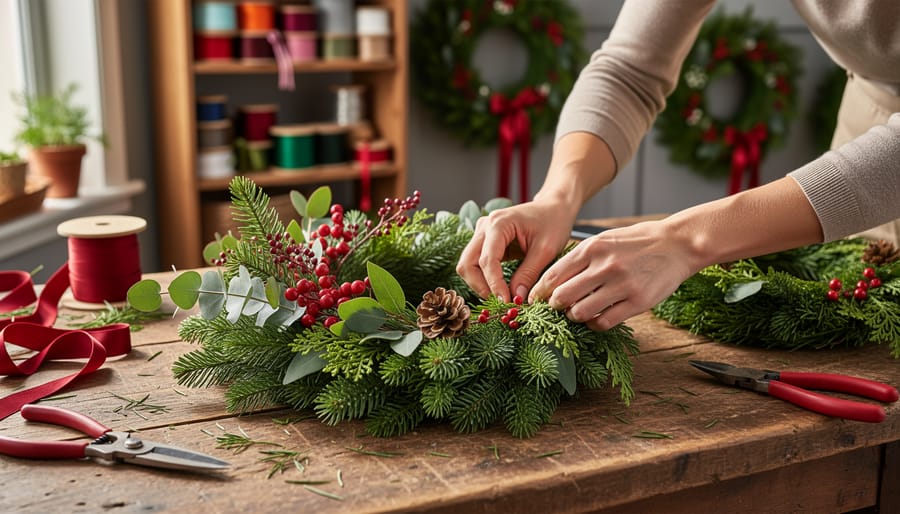
Creating holiday greenery arrangements works best when you set aside dedicated time and tackle each step methodically. Most people underestimate how long the process takes, then rush through the creative part when the materials are finally ready. Plan for a relaxed afternoon or evening when you won’t feel pressured, and your arrangements will show the care you invested.
The complete process breaks down into distinct phases, each requiring specific attention:
- Conditioning your greenery (30-60 minutes): As soon as you bring fresh cuttings home, recut stems at an angle and submerge them in room-temperature water in a cool location. Let them drink for at least two hours, though overnight is ideal. This hydration step determines how long your arrangement will last.
- Gathering supplies and preparing your workspace (15-20 minutes): Assemble your container, floral foam (if using), wire, pruning shears, and any decorative elements before you start. Protect your work surface with newspaper or a plastic cloth. If you’re using foam, soak it completely until it sinks on its own.
- Building the structure (20-45 minutes): Start with your largest greenery pieces to establish the arrangement’s shape and proportions. Work from the back forward and outside inward, inserting stems firmly into foam or positioning them in your vase. This foundational step takes longer than most people expect, especially for larger pieces.
- Filling and refining (15-30 minutes): Add secondary greenery to fill gaps and create depth, then tuck in berries, pinecones, or ornamental elements. Step back frequently to check balance and proportions from the viewing angle.
- Final placement and watering (10-15 minutes): Move your completed arrangement to its display location, add water if needed, and make any last adjustments now that you see it in context. Clean up your workspace while everything’s still fresh in your mind.
For a simple centerpiece or wreath base, budget two hours from start to finish. Elaborate mantel displays or multiple coordinating arrangements can easily fill an afternoon. If you’re making several pieces, consider an assembly-line approach where you condition all greenery together, then build all arrangements in sequence. This workflow feels more efficient than completing one arrangement at a time and helps ensure visual consistency across multiple pieces.
Keeping Arrangements Fresh: Daily Care and Refresh Timing
Signs It’s Time to Refresh or Replace
When fresh-cut greenery starts to fade, it sends clear signals. Check the needles or leaves daily, if they feel crisp and brittle rather than supple, or if they’ve shifted from vibrant green to dull gray-green or brown, freshness has peaked. Run your hand gently along a branch; excessive needle drop means the piece has dried out and won’t recover with water alone.
Look for drooping stems that don’t perk up after misting, especially on broadleaf varieties like eucalyptus or boxwood. Brown tips spreading inward from the edges indicate the greenery has passed its prime. If your arrangement develops a musty smell rather than that fresh pine or cedar scent, remove affected pieces immediately to prevent the issue from spreading.
Assess your display every morning. When more than a third of the greenery shows these signs, it’s time to either refresh with new cuttings or retire the arrangement entirely. Remove spent pieces promptly and save any reusable containers or mechanics with these storage hacks for next year. Strategic replacement of just the most visible failing stems can extend your display another week without rebuilding from scratch.
Common Questions About Holiday Greenery Timing
Can I make my arrangements a week before the holidays?
Yes, if you choose hardy varieties like noble fir, cedar, or boxwood and keep arrangements in a cool location with daily misting. Store them in an unheated garage or porch until you’re ready to bring them inside for display.
How do I store cut greenery before arranging it?
Stand stems in deep buckets of water in a cool space away from direct sunlight, recut the ends every few days, and mist the foliage each morning. Most greens will hold for five to seven days this way before you need to assemble them.
What should I do if my greenery drops needles early?
Move the arrangement to a cooler spot, increase misting frequency to twice daily, and check that stems are still drawing water. If needle drop continues, replace the affected branches with fresh cuts rather than trying to salvage them.
How do I coordinate timing when making multiple arrangements?
Start with larger focal pieces and work down to smaller accents, allowing thirty minutes per substantial arrangement. Prep all greenery at once by conditioning stems together, then assemble your main display first while branches are freshest.
Beyond these core concerns, timing questions often reflect the unique rhythm of each household. If you’re hosting multiple gatherings across several weeks, consider creating a base arrangement with long-lasting greens like cedar and boxwood, then swapping in accent pieces like pine or eucalyptus closer to each event. This approach gives you a consistent foundation while keeping displays looking vibrant.
For families juggling busy December schedules, breaking the process into stages helps. Gather your containers and mechanics one weekend, source and condition greenery mid-week, then reserve a relaxed evening for the actual arranging. There’s no rule that says everything must happen in one marathon session.
Temperature shifts between rooms matter more than most people realize. An arrangement placed near a fireplace or heating vent will fade faster than one in a cooler entryway, sometimes by several days. If you notice one display struggling while others thrive, location is likely the culprit. Simply relocating it to a less heated spot can add days to its lifespan, letting you maintain your original timeline without constant replacements.
The beauty of holiday greenery arrangements lies not just in their seasonal charm, but in how they reflect your own family’s rhythms and traditions. Whether you’re the person who decorates the day after Thanksgiving or someone who waits until mid-December for that perfect fresh fragrance, there’s no single “right” timeline, only the one that works for your household.
What matters most is matching your timing to your lifestyle. If you travel for the holidays, plan your arrangements for when you’ll actually be home to enjoy them. If you host early gatherings, create those displays when they’ll make the biggest impact. The guidelines we’ve covered give you the framework, but your personal schedule and preferences should always take priority.
With proper planning and the care strategies we’ve explored, your greenery will stay vibrant through whichever celebrations matter most to you. Fresh pine boughs, fragrant cedar, glossy holly, these natural materials transform ordinary spaces into something genuinely special, marking the season in a way that artificial alternatives simply can’t match.
As you plan your holiday decorating this year, trust your instincts about timing. Your home, your traditions, your timeline. That’s the real magic of bringing seasonal festive floral and greenery arrangements into your space.