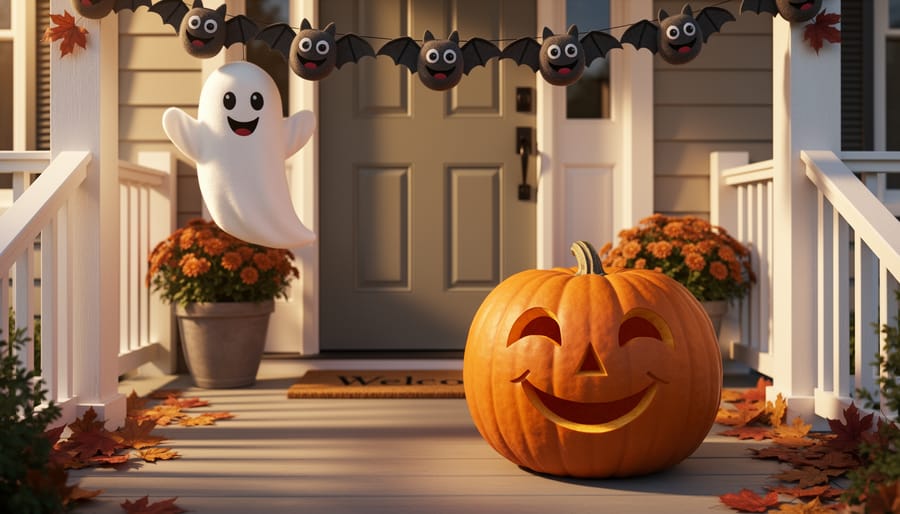
The simplest fix for Halloween decorations that send toddlers running is to swap out traditional scary motifs for friendly faces and soft, rounded shapes. If your little ones cling to your leg every time they spot a grinning skeleton or realistic spider, you’re dealing with the most common decoration disconnect: what delights adults often terrifies kids under six.
Start with a quick walkthrough of your current setup. Count how many decorations feature sharp teeth, realistic gore, or jarring movements. If more than half fall into that category, you’ve found your culprit. The good news? Adorable alternatives are everywhere this season. Halloween pillows featuring smiling pumpkins, friendly ghosts, and cheerful bats are already in stores, giving you an easy starting point that doubles as cozy fall décor. Retailers are stocking designs that range from whimsical witches to playful spiderwebs, and big Halloween moments don’t require big prices at budget-friendly spots.
This guide walks you through identifying which decorations cross the line from fun to frightening for young children, then offers step-by-step fixes to transform your space into a celebration everyone can enjoy. We’ll cover DIY swaps you can make in an afternoon, store-bought solutions that work straight out of the package, and prevention strategies for next year’s setup. No special skills required, just a willingness to see your decorations through a three-year-old’s eyes.
Why Traditional Halloween Decorations Can Be Too Scary for Kids
You love October’s festive energy, but lately you’ve noticed your toddler won’t walk past the front porch, or your preschooler has started waking up with nightmares about “the scary man outside.” These reactions tell you something important: your Halloween decor has crossed the line from fun to frightening for your little ones.
Watch for these telltale signs that your decorations are overwhelming rather than entertaining:
- Children refuse to enter decorated rooms or rush past certain areas of the house
- Increased nightmares or requests to sleep in your bed during Halloween season
- Asking repeatedly when you’ll take the decorations down or hiding them in closets
- Reluctance to come home from daycare or friends’ houses during October
- Covering their eyes when approaching your front door or turning away from specific pieces
Understanding why these reactions happen comes down to child development. Kids under five can’t always distinguish fantasy from reality, so a grinning skeleton isn’t just pretend, it’s genuinely threatening. Research shows that age affects what scares children, with toddlers particularly sensitive to distorted faces and sudden movements.
When kids start avoiding decorated spaces, the problem compounds. If avoidance can be reinforced what begins as mild discomfort can escalate into genuine anxiety. Pay attention to how your child behaves around your decorations, their reactions will guide you toward creating a Halloween atmosphere everyone can enjoy.
What Makes Halloween Decorations Kid-Friendly vs. Scary
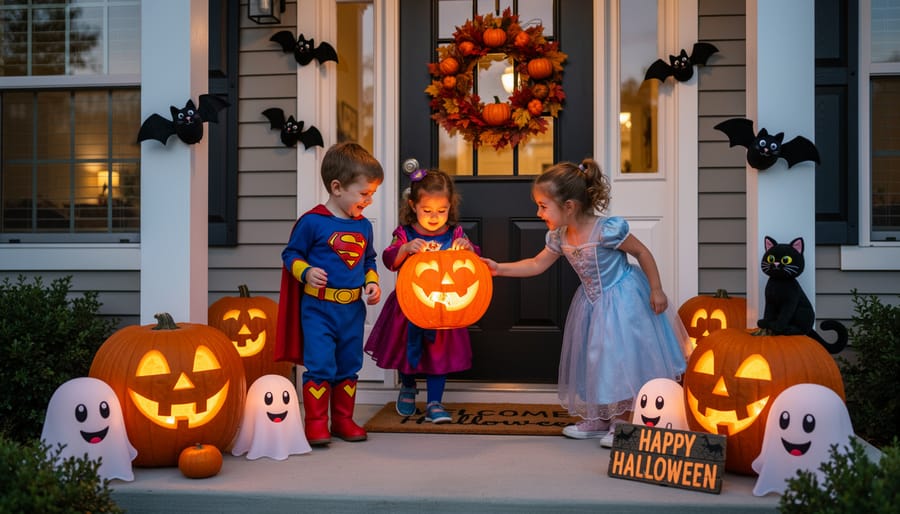
The difference between Halloween decorations that delight kids and those that leave them hiding behind the couch comes down to a few specific design elements. Understanding these distinctions helps you choose or create decorations that capture the festive spirit without triggering genuine fear.
Color schemes set the emotional tone immediately. Dark, saturated colors like deep black, blood red, and murky purple signal danger to young minds. Pastels and softer tones, think lavender ghosts, peachy pumpkins, mint-green witches, read as playful rather than threatening. Even traditional orange becomes more approachable when paired with cream, white, or soft yellow instead of harsh black.
Facial expressions make the biggest impact on whether children perceive a character as friend or foe. Rounded eyes, upturned mouths, and gentle features create approachable characters. Sharp teeth, hollow eyes, dripping mouths, and angular features trigger fear responses, especially in children under seven who are still developing their ability to distinguish fantasy from reality.
Size and positioning matter more than parents often realize. A three-foot-tall decoration at a child’s eye level feels confrontational. The same design scaled down to six inches becomes cute. Similarly, decorations placed high on walls or mantels feel less threatening than life-sized figures lurking near doorways where kids walk.
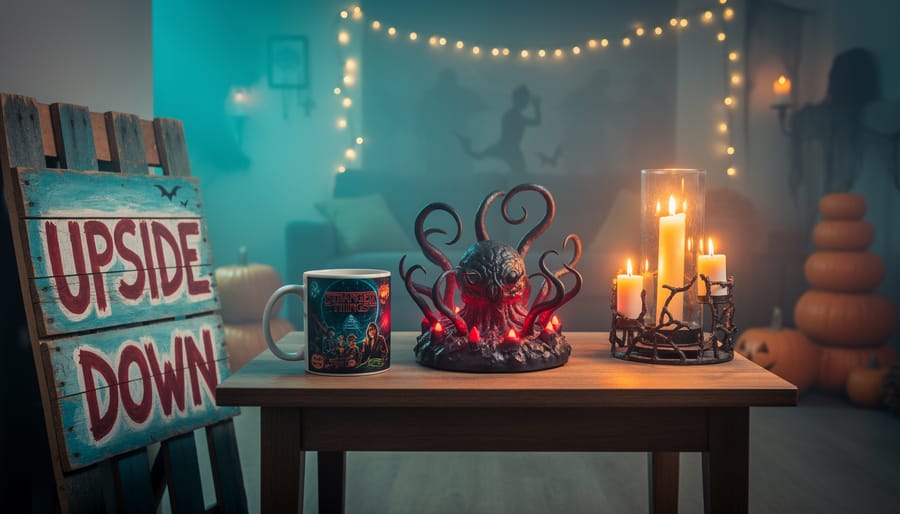
Lighting choices dramatically shift the mood, as colored lights affect mood and perception. Warm, steady glows from string lights or LED candles create cozy ambiance. Flickering strobes, harsh spotlights casting dramatic shadows, and cold blue or green lighting amplify fear factors.
Here’s a quick reference for choosing decorations:
| Element | Scary Version | Cute Alternative |
|---|---|---|
| Colors | Deep black, blood red, dark purple | Pastels, orange with cream, soft neutrals |
| Faces | Hollow eyes, sharp teeth, menacing expressions | Round eyes, smiling mouths, friendly features |
| Lighting | Strobes, harsh spotlights, cold blue/green | Warm string lights, battery candles, soft glows |
| Materials | Realistic gore, rough textures, sharp edges | Soft fabrics, plush materials, rounded shapes |
Thematic choices also separate cute from creepy. Friendly characters like smiling pumpkins, cheerful witches with broomsticks, or ghosts playing together work well for families. Realistic spiders, severed body parts, or menacing figures with weapons cross into territory that’s developmentally inappropriate for younger children.
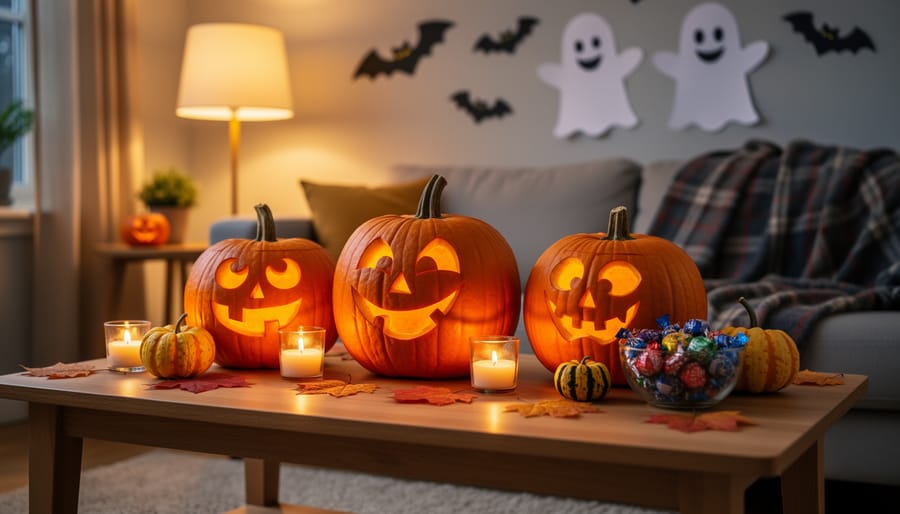
How to Transform Your Halloween Decor into Adorable, Family-Friendly Style
Choose Characters with Friendly Faces
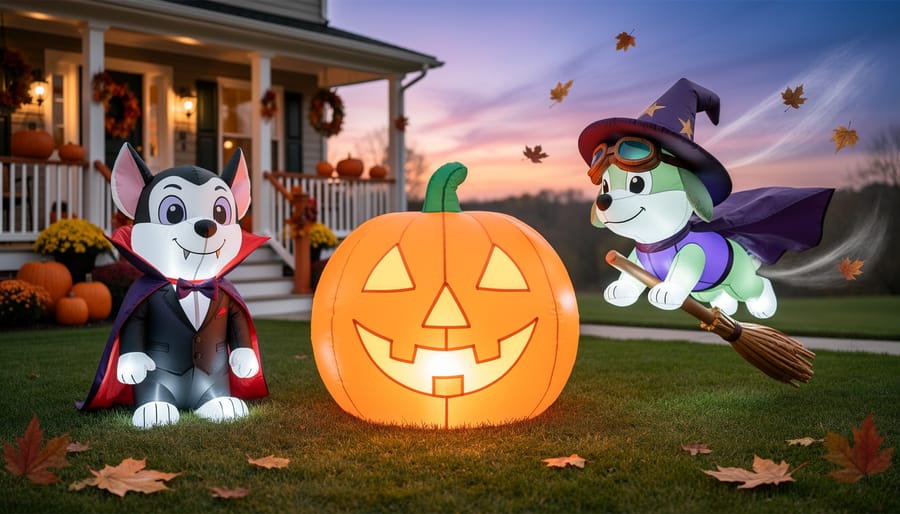
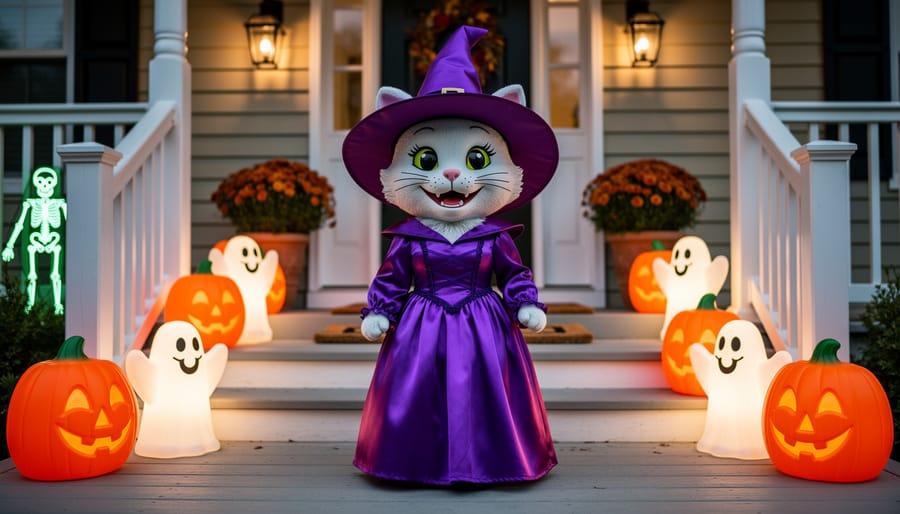
The most powerful way to create adorable Halloween decor is choosing characters that look approachable. Start with pumpkins that have wide, toothy grins rather than sinister scowls. When selecting store-bought decorations, look for ghosts with circular eyes and upturned mouths instead of hollow, menacing expressions. Friendly black cats with bright eyes and perked ears work beautifully, while cheerful witches wearing colorful dresses and smiling faces replace the stereotypical crone.
For DIY Halloween decorations paint friendly faces on plain foam pumpkins using simple circles for eyes and curved lines for smiles. Add rosy cheeks with a touch of pink paint to make ghosts look sweet rather than spooky. When crafting witch decorations, give them whimsical details like striped stockings or polka-dot hats. Black cat silhouettes become adorable when you add white whiskers and a small pink nose.
The key is facial expression. Round, wide-set eyes signal friendliness, while narrow slits read as threatening. Keep mouths either neutral or upturned, avoiding sharp teeth or gaping holes. These small adjustments transform traditional Halloween characters into decorations your whole family will love.
Work with Soft, Inviting Color Palettes
Transforming your Halloween decor starts with rethinking color. Pastels create an instant softness that makes even classic Halloween symbols feel approachable. Lavender pumpkins, mint-green ghosts, and peach-toned witches shift the mood from eerie to endearing. You don’t need to abandon orange and black entirely, just balance them with gentler shades.
White and cream serve as perfect neutrals that brighten any Halloween display. A cream-colored tablecloth under orange pumpkins softens the intensity, while white ghosts made from cotton fabric feel friendly rather than frightening. Warm tones like coral, butter yellow, and soft pink add cheerful energy without overwhelming young children.
For DIY transforming, acrylic craft paint works beautifully on plastic decorations. Lightly sand the surface first, then apply two thin coats of pastel paint to tone down garish store-bought items. For fabric pieces, choose cotton in softer hues and use fabric markers to add friendly faces. Even swapping out a single bold element, like replacing a black tablecloth with a pale purple one, changes the entire room’s feel. Start with what you already own and experiment with small color shifts before investing in new pieces.
Create Playful Pillows and Soft Textiles
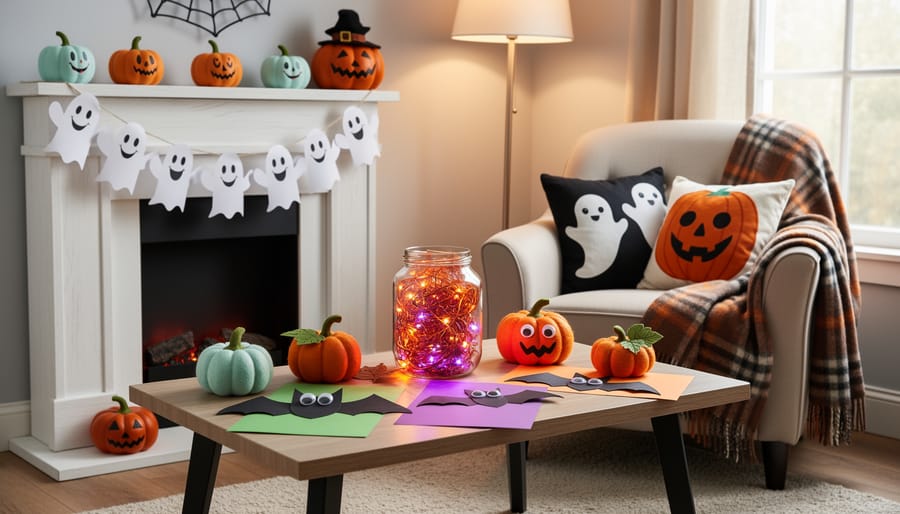
Halloween pillows transform any room into a cozy, festive space without a single scary element. Look for designs featuring smiling pumpkins, friendly witches, cheerful ghosts, playful bats, and whimsical spiderwebs in soft oranges, purples, and creams. These textiles are currently available in many cute designs that add seasonal charm to sofas, beds, and reading nooks.
If you want to make your own, start with plain pillowcases in fall colors. Use fabric markers to draw simple jack-o-lantern faces with wide grins, or trace ghost shapes with rounded edges and dot eyes. No sewing skills? Fabric paint and stencils work beautifully on cotton pillowcases. For sewers, cut two squares of felt or cotton, stitch three sides, stuff with polyester fill, and close the fourth side. Add button eyes or embroidered details for extra personality.
Soft textiles like fleece throw blankets with pumpkin patches or cotton table runners with candy corn patterns continue the gentle theme. These pieces layer warmth and color into your space while keeping the mood light and playful. You can even repurpose old dish towels by adding simple painted designs, or tie-dye white pillowcases in orange and purple for an affordable custom look. The same friendly-face principles that guide your easy ghost decor work perfectly on fabric projects.
Use Gentle Lighting Instead of Harsh Effects
Lighting can transform the entire mood of your Halloween display. Skip the strobe lights and harsh spotlights that can startle young children, and opt for warm, gentle alternatives instead. Battery-operated LED candles give you the flicker of real flames without any safety concerns, and they work beautifully inside carved pumpkins or lined along walkways. Warm white or soft orange string lights create a cozy glow rather than a haunted-house atmosphere.
Soft LED pumpkins are another excellent choice, casting a warm amber light that feels festive without being intense. You can create simple DIY household decor lanterns by placing battery-operated tea lights inside mason jars decorated with tissue paper ghosts or inside paper bags with friendly jack-o’-lantern faces cut out. These homemade luminaries line pathways beautifully and give children something they helped create to be proud of.
The key is controlling brightness and avoiding anything that flashes or changes suddenly. Consistent, warm lighting makes your Halloween decorations feel welcoming rather than overwhelming, helping even the youngest family members enjoy the festive season.
Build a Budget-Friendly Cute Halloween Collection
You don’t need a big budget to create a charming Halloween display. Start by shopping dollar stores for basic supplies like foam pumpkins, plain pillowcases, and battery-operated tea lights. Transform these finds with acrylic paint, adding friendly faces and pastel accents that suit your family’s style.
Repurpose what you already own instead of buying everything new. White pillowcases become ghost decorations with fabric markers. Mason jars turn into lanterns with tissue paper and string lights. Cardboard boxes convert into painted pumpkins or cat silhouettes. The homemade Halloween costs are minimal when you get creative with household items.
Focus on three to five statement pieces rather than cluttering every surface. A wreath for the door, a centerpiece for the table, and a few pillows for the couch create impact without overwhelming your space or your wallet. Quality over quantity keeps both your budget and your home manageable. You can add one or two new handmade items each year, building a collection that grows with your family.
Preventing Future Halloween Decoration Overwhelm
Thoughtful planning now prevents the annual scramble to find decorations that work for your family. Once you’ve built a collection of adorable Halloween decor, protecting that investment and keeping it organized ensures you’ll enjoy those pieces for years to come.
Start by creating a simple decoration inventory. Take photos of your favorite pieces and note which ones your kids love most. This prevents duplicate purchases and helps you identify gaps in your collection before the Halloween season starts. When you know exactly what you own, you can shop strategically rather than impulsively grabbing items that might end up being too similar to what you already have at home.
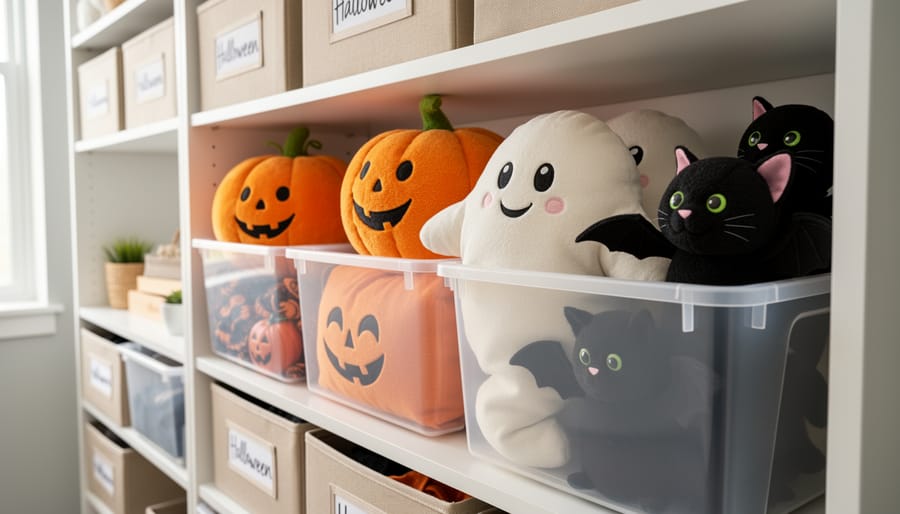
- Dedicate specific storage containers to Halloween decorations only, labeling each bin by category (soft items, outdoor pieces, DIY crafts)
- Involve kids in the annual decoration selection process by letting them choose which three to five items they want displayed in their rooms
- Create a simple shopping list before browsing stores, focusing on filling specific needs rather than buying everything that catches your eye
- Review your collection each January and retire decorations that no longer fit your family’s comfort level as children’s preferences mature
- Photograph your favorite decoration arrangements so you can recreate successful displays without starting from scratch each year
Smart seasonal storage hacks protect soft decorations like Halloween pillows from dust and moisture. Store fabric items in breathable bins or pillowcases rather than plastic bags, which can trap humidity and create musty odors. Keep batteries separate from electronic decorations to prevent corrosion during the off-season.
As your children grow, their tolerance for spookier elements will naturally increase. Rather than replacing your entire collection, add a few slightly more mature pieces each year while keeping beloved cute items for younger siblings or simply because they bring joy. The friendly ghost pillow that comforted your toddler might become a treasured tradition your teenager still wants displayed on the couch.
Why Aren T My Halloween Decorations Kid Friendly Terms to Know
- Pastel Halloween Palette
- A color scheme using soft lavender, mint green, peach, and cream tones alongside or instead of traditional orange and black. This approach creates festive atmosphere while reducing the intensity that can overwhelm young children.
- Friendly-Face Design
- Decorative elements featuring smiling expressions, rounded features, and approachable characteristics rather than menacing or grimacing faces. This design choice transforms traditional Halloween characters into welcoming figures that comfort instead of frighten.
- Soft Textile Decorations
- Fabric-based Halloween items like pillows, plush figures, and cloth banners that offer tactile comfort and visual warmth. These decorations invite touch and interaction, making them particularly suitable for families with young children.
- Warm Ambient Lighting
- Gentle illumination using string lights, battery-operated candles, or soft LED elements instead of strobe effects or harsh spotlights. This lighting strategy maintains festive mood while avoiding the jarring effects that can startle or distress children.
- Age-Appropriate Scale
- Decoration sizing that considers a child’s perspective and developmental stage, avoiding oversized or looming figures that appear threatening at kid eye-level. Smaller, manageable decorations feel less imposing and more playful to young family members.
Understanding these terms helps you make intentional choices when selecting or creating Halloween decorations. Each concept works together to build an environment that celebrates the holiday while respecting your children’s comfort levels. As you shop or craft, keeping these principles in mind ensures your decorations stay firmly in the adorable category rather than accidentally crossing into scary territory.
What to Watch For
When shopping for cute Halloween decorations, watch for items that could still startle sensitive children despite appearing adorable in the package. Some decorations marketed as “friendly” include motion sensors or sound effects that activate unexpectedly, which can frighten toddlers and preschoolers even if the character itself is smiling. Check product descriptions carefully before purchasing battery-operated items.
Pay attention to size as well, a three-foot-tall plush ghost might seem cute online, but its actual scale can be intimidating to young children in person. Similarly, decorations with googly eyes or moving parts may read as playful to adults but unsettling to kids who don’t yet understand how these mechanisms work. When introducing new pieces to your collection, start with smaller items and gauge your child’s reaction. If something causes hesitation or fear, store it for future years rather than pushing through. Your child’s developmental stage matters more than completing a decoration scheme, and what feels too spooky this October might be perfectly fine next year as they grow and their comfort with Halloween imagery expands.
Common Questions About Kid-Friendly Halloween Decorations
Which cute Halloween decoration style works best for toddlers versus older children?
Toddlers respond well to simple, rounded shapes like smiling pumpkins and soft fabric ghosts in pastel colors, while elementary-age kids often enjoy slightly more detailed characters like friendly witches and playful black cats. As children develop, you can gradually introduce more traditional orange and black elements while keeping facial expressions happy and inviting.
How do you balance cute decorations when older siblings want something spookier?
Create zones within your home where you can accommodate different preferences, keep common areas like the living room and entryway adorable and family-friendly, while allowing older kids to decorate their bedrooms with edgier pieces. This approach respects everyone’s Halloween style without overwhelming younger children in shared spaces.
Can you successfully mix cute and traditional Halloween decor in the same display?
Absolutely, and it often creates the most interesting displays. Use traditional colors like orange and black as your foundation, then soften the overall effect with friendly-faced characters and warm lighting. A classic orange pumpkin display becomes kid-friendly when each pumpkin wears a silly smile instead of a menacing scowl.
Where should you store soft decorations like pillows between seasons?
Store Halloween pillows in breathable cotton storage bags or plastic bins with ventilation holes to prevent moisture buildup and musty odors. Keep them in a cool, dry location away from direct sunlight, and consider adding a lavender sachet to maintain freshness until next October.
The key to long-term success with kid-friendly Halloween decor lies in understanding that what works this year might need adjustment next year. Children’s comfort levels change as they grow, so stay flexible and keep the conversation open about which decorations make everyone feel festive rather than frightened.
Creating a home that celebrates Halloween without frightening little ones is entirely possible, and it’s more rewarding than you might think. You don’t need to tackle everything at once. Start with one simple DIY project, maybe a smiling painted pumpkin or a cozy Halloween pillow, and let your collection grow naturally over the years. The decorations that bring joy to your whole family, from your youngest to your oldest, are the ones worth keeping. When everyone walks through the door smiling instead of scared, you know you’ve got Halloween just right.