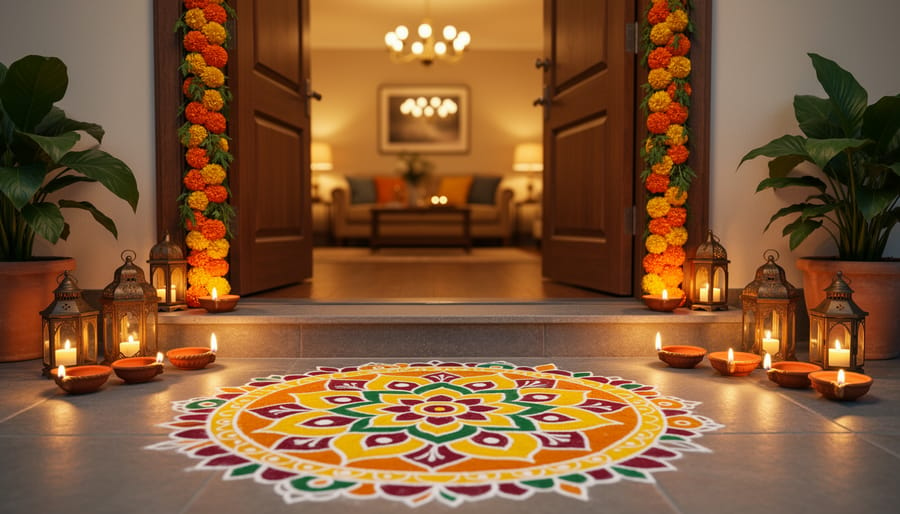
You can turn any home into a Diwali glow in an afternoon with three things: clay diyas, a rangoli at the door, and a few lanterns strung where the light can spill. Plan on two to three hours, and no craft experience is needed. Most of what you’ll use, like marigolds, tea lights, colored powders or rice, and the glue and jars from your fall craft bin, is probably already within reach.
Diwali 2026 landed on Sunday, November 8, so this guide works two ways. If your home is still glowing, it shows you how to keep the magic going. If you’re already thinking ahead, it’s your head start for next year. Diwali is a five-day celebration with the main event on the third day, and knowing when Diwali begins helps you pace the decorating instead of rushing it.
The cozy-glow instincts you used for autumn transfer beautifully. Warm light, textured natural materials, and a welcoming entrance are the whole recipe. Below, you’ll find materials, safety tips, an ordered set of steps, and a quick checklist to make sure everything looks and feels just right.
Key Details: What Diwali Decor Looks Like in 2026
Here’s the quick snapshot. This year, Diwali 2026 on Sunday November 8, in the United States, and the celebration stretches across five days, with the main event landing on day three. Indian-American families mark the occasion by dressing homes and temples in marigold garlands, and giving flowers is part of the tradition too.
So what does the look actually come down to? Five pieces carry nearly all of it: a rangoli at the entrance, a marigold toran on the door, clay diyas grouped in clusters, fairy lights or lanterns, and flowers throughout.
Each one earns its place for a reason. The rangoli greets guests at the threshold, and the toran frames the doorway in golden-orange. Diyas bring the warm, flickering glow that gives the festival its name. Lights and lanterns spread that glow to every corner, softening the room. Flowers tie it together with color and that unmistakable marigold scent.
Because these elements are simple and layered, you can scale them up or down. A single rangoli and a handful of diyas still say “welcome” just as warmly as a fully decorated home.
From Spooky to Sparkly: Using Your Halloween Crafting Skills for Diwali
If you spent October gluing, painting, and arranging a cozy glow around your home, you already own most of what Diwali decor needs. The warm flicker you chased with your Halloween DIY ideas is the very same feeling that makes a Festival of Lights home so inviting. The trick is simply changing the mood from spooky to sparkly.
Here’s what to pull out of the craft bin:
- String lights: Swap orange and purple for warm white, then drape them along shelves and windows for a soft shimmer.
- Glass jars: Wipe off the cobweb details and nestle a battery tea light inside for a quiet golden glow.
- Battery candles: Tuck them among clay diyas, especially near curtains or in drafty doorways.
- Trays: Use them as stages for diya clusters, and layer in fresh marigold petals for color and scent.
- Craft paint: Brush gold, red, or teal patterns onto plain clay diyas and jars.
- Paper lanterns: Choose bright, jewel-toned ones over black or orange.
What you set aside matters just as much. Retire the skeletons, bats, and faux cobwebs, and let marigold garlands, flowers, and rangoli carry the celebration instead. That keeps the look festive and respectful, a warm welcome rather than a leftover Halloween scene.
What You’ll Need: Tools and Materials for Your Diwali Decor
Gathering supplies is half the fun, and most of what you need is probably already in your craft bin from fall projects. Here’s the full list, grouped by project so you can shop (or shop your shelves) one piece at a time:
- Rangoli: chalk, colored powder or dyed rice, stencils, and fresh flower petals.
- Toran: real or faux marigolds, thread or thin wire, and ribbon for accents.
- Diyas: clay diyas with oil or wax and cotton wicks, or flameless LED diyas.
- Lanterns and lights: paper or metal lanterns, fairy lights, and tea lights.
Small space or rental? You have easy swaps. Chalk, colored rice, or flower petals make a lovely rangoli on a hallway floor, balcony, or reusable board where powder isn’t welcome. A paper garland can stand in for a fresh marigold toran, and removable hooks keep your door frame looking brand new.
Real or flameless is mostly about your home. Real diyas give that classic warm flicker and a soft, toasty scent, but flameless LED versions are a smart pick for breezy doorways, curious pets, and buildings with candle rules. You can even mix them, using real flames on a sturdy tray in a calm room and LEDs everywhere else, so the whole house glows with peace of mind.
Before You Light Anything: Safety Warnings for Diyas and Decor
There’s something magical about a row of flickering diyas, and a few simple habits let you enjoy that glow without a second thought. Start with placement. Marigold garlands, paper lanterns, curtains and fabric runners all catch easily, so give every open flame a generous bubble of clear space, at least a hand’s width in every direction and ideally more.
Next, choose sturdy, heat-safe trays or plates, and set them on flat, steady surfaces away from the edge of a table or shelf. Never leave a lit diya unattended, even for a quick trip to the kitchen. If you’re using oil lamps, crack a window or keep the room gently ventilated so the air stays fresh.
Think about your household, too. Curious paws, swishing tails and toddler hands can knock over a lamp in a heartbeat, so tuck real flames up high or out of reach.
Flameless diyas are also the easy answer for windy entryways and rentals with no-flame rules, and they still give you that warm, golden shimmer.
How to Decorate Your Home for Diwali, Step by Step
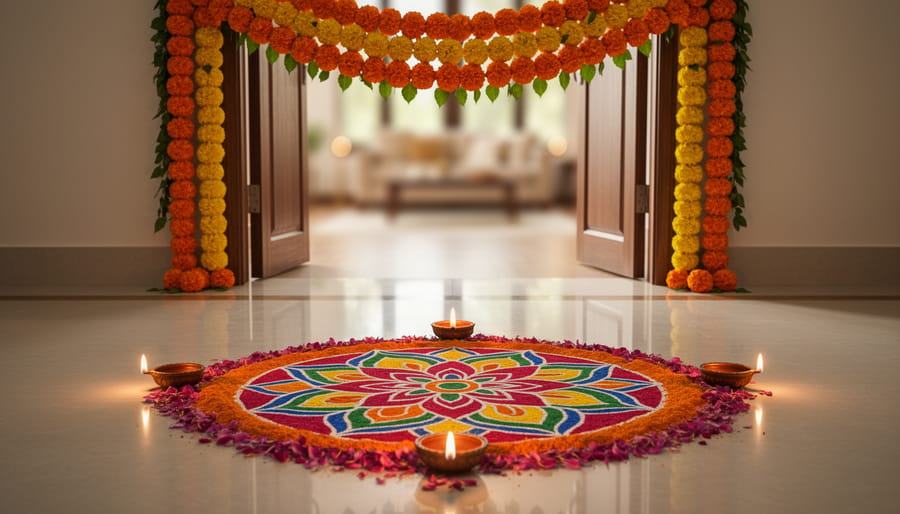
A Welcome-Mat Rangoli Anyone Can Make
A rangoli is the easiest way to say “welcome” at your front door, and you don’t need artistic talent to make one. Start with chalk and sketch a simple circle on the floor just outside or inside your entrance. Add a ring of petal shapes around it, like a flower, and you’ve got your pattern.
Next, fill it in. Colored rangoli powder gives the brightest, most traditional look, but dry rice tinted with a little food coloring or loose marigold and rose petals work beautifully too. Work from the center outward, pinching the color between your fingers for clean lines. Finish by setting a single lit diya right in the middle.
Not every entry allows powder. For hallways, balconies, and apartment doorways, use petals instead, or build your design on a reusable wooden board or large tray you can lift and store. Petals sweep up easily and smell wonderful, too.
If you enjoyed refreshing your porch for fall, think of this as one of those easy seasonal updates that makes a big first impression.
Hanging a Marigold Toran on Your Door
A marigold toran is the golden-orange welcome that tells everyone who walks up to your door that the festival has arrived. Fresh blooms give off that earthy, slightly peppery scent that so many families associate with Diwali, and faux ones keep the same warm color for years of use.
Start by measuring the top of your door frame, then add a few extra inches so the garland can dip gently in the middle. Cut a length of sturdy string or thin craft wire to that measurement. If you’re using fresh flowers, snip the stems close to the bloom and thread a needle through the center of each one, sliding them along the string. Alternate colors, such as a deep orange bloom followed by a yellow one, to give the strand a rhythm. Faux marigolds can be knotted or glued on the same way.
Tuck in mango-style leaves, or green ribbon, between the flowers for a fuller, fresher look. A bit of gold ribbon at each end adds a little shimmer that echoes your diyas.
To hang it, use removable adhesive hooks at each corner of the frame. They hold the weight without pulling at your paint, which is ideal if you rent. Press each hook firmly, wait a minute, then loop the toran over so it hangs evenly.
Clustering Clay Diyas and Layering Lanterns and Lights
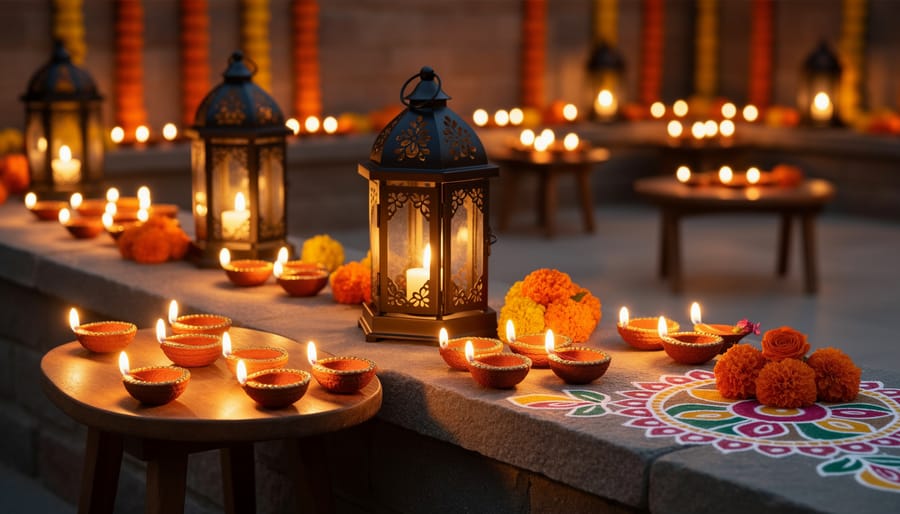
Think in odd numbers: three, five, or seven diyas in a group always look more natural than pairs. Set them at different heights by nesting a few on a small tray, then resting others on an overturned bowl or a stack of books under a cloth. Keep the glow low and spread out, so the eye travels instead of landing in one spot.
Once the diyas are in place, soften everything with lanterns and fairy lights. Tuck a string of lights behind each cluster, and set a lantern beside it to catch the flicker.
Here’s a quick walk through the house:
– Entryway: Place a tray of five diyas on a console or shoe bench, with one lantern at the end. It’s the first warm welcome guests see.
– Living room: Line the mantel or a shelf with groups of three and seven, then drape fairy lights along the edge. Flowers tucked between the clusters add color and a little scent.
– Dining table: Run a tray down the center with a cluster at each end, keeping everything low enough to talk over.
– Balcony: Use sturdy lanterns here and flameless diyas if it’s breezy, so the glow stays steady.
Step back, dim the overhead lights, and adjust until the room feels like a gentle, layered shimmer.
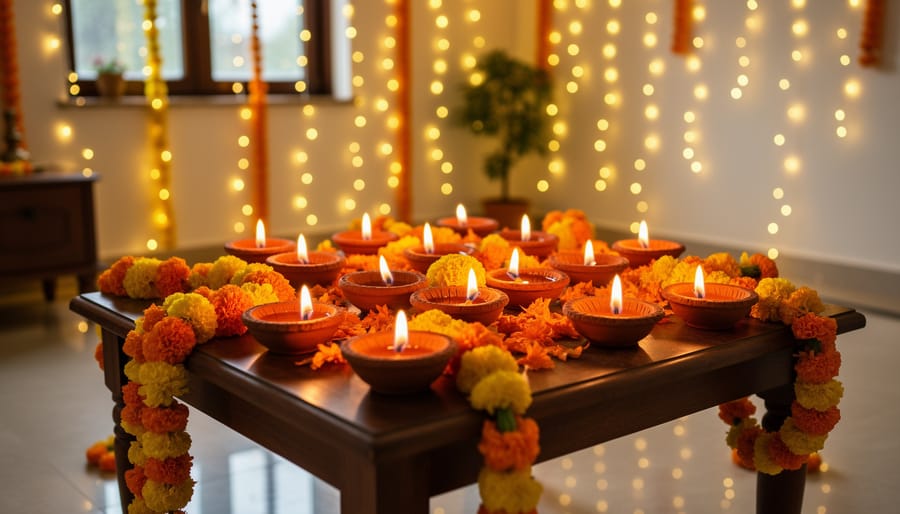
A Peek Inside: A Festive Home Tour From Doorstep to Dining Table
Picture a front door at dusk. A round rangoli sits on the step, petals of marigold and rose fanning out in saffron, magenta, and green, with a single diya glowing at its center. Above it, a marigold toran drapes the frame, and you catch that earthy, slightly peppery scent before you even reach the handle.
Inside, the living room is all warm gold. Clay diyas cluster in odd-numbered groups on the mantel and coffee table, each at a slightly different height, while fairy lights trace the bookshelf and a paper lantern throws a soft shimmer across the wall. Nothing is matchy. The palette stays simple: marigold orange, deep pink, and a little brass.
At the dining table, a decorated tray becomes the centerpiece. Think a few diyas, a scatter of flower petals, and a small bowl of sweets, all within easy reach and clear of anything flammable.
Copy the layers, not the exact pieces: glow at the door, glow at eye level, glow at the table.
Check Your Work and Keep the Glow Going
Take a slow lap from the doorstep inward before you call it done. A quick last look catches the small things that matter most.
- Flames sit well away from garlands, curtains, and paper decor.
- Flameless LED diyas are ready as a backup for breezy or pet-heavy spots.
- The rangoli isn’t a trip hazard for anyone walking through.
- The marigold toran hangs securely on its hooks.
- Every string of fairy lights and every lantern glows when tested.
- Reusable pieces are set aside to store for next year.
Once the festivities wind down, refresh fading marigolds with a light mist or swap in a few new blooms. Gently wrap clay diyas and fold lanterns flat, and use a few smart ways to store decor so everything stays ready for next year. Tuck a small bouquet into your plans too, since giving flowers is part of the tradition.
Diwali Decor FAQs
Still have questions? Here are quick answers to the ones that come up most.
When is Diwali in 2026?
In the United States, Diwali fell on Sunday, November 8, 2026. If you missed it this year, you now have plenty of time to gather supplies for the next celebration.
How many days does Diwali last?
It’s a five-day celebration, with the main event on the third day. Many families start decorating before the first day and keep the glow going through all five.
What are the must-have Diwali decorations?
Five pieces cover the classic look: a rangoli at the entrance, a marigold toran on the door, clay diyas in clusters, and fairy lights and lanterns. Flowers round out the whole scene.
Can I use LED diyas instead of oil lamps?
Absolutely. Flameless diyas give you the same warm flicker without worrying about drafts, curtains, or curious pets, so they’re a smart pick for windy doorways and rentals.
What can renters use instead of powder rangoli?
Flower petals, colored rice, or chalk on a reusable board all work beautifully. They keep floors clean and are easy to sweep up when the festivities wind down.
Which flowers are traditional for Diwali decor?
Marigolds are the signature choice. Indian-American families decorate homes and temples with marigold garlands and also give flowers during the holiday.
Once you’ve got the basics down, the fun part is making the space your own.
That’s really the whole formula: a rangoli to greet people, a marigold toran on the door, diyas glowing in clusters, a layer of lights and lanterns, and fresh flowers to finish. If you loved the cozy, hands-on spirit of your Halloween projects, you already have the instincts for this. So start gathering supplies now, a few jars here, some petals and string lights there. When Diwali comes around again, the work will already be half done, and all that’s left is lighting the glow.