
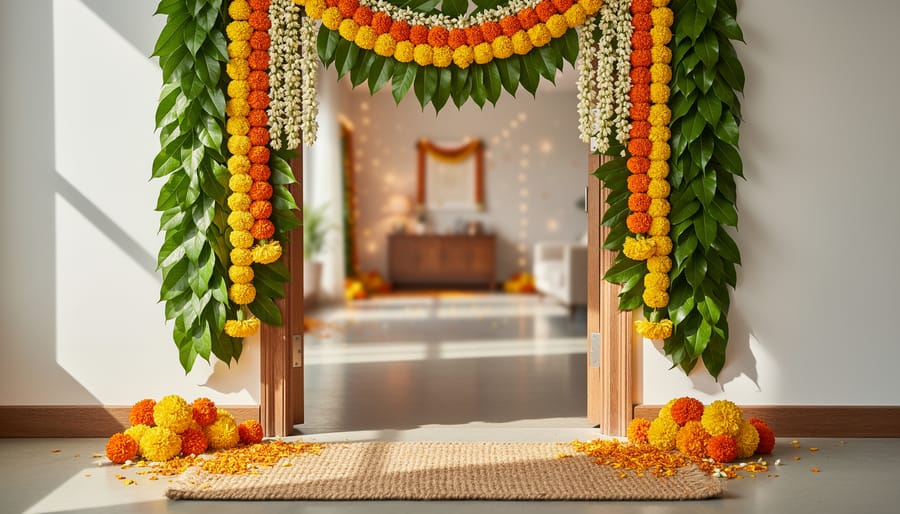
Buy your flowers and greenery one to two days before the celebration, make garlands and rangoli bases the morning of, and hang everything as close to the festivities as you can manage. That simple rhythm keeps marigolds plump, mango leaves glossy, and jasmine fragrant when guests walk through the door.
The exact window shifts with the season. In the cool, dry months of late autumn and winter, sturdy blooms like marigolds can be bought two days ahead and still look vibrant. In the humid heat of summer and the monsoon, buy the day before at most, because petals wilt and brown fast. Delicate flowers such as jasmine and roses need the tightest timing in any season.
What changes your window most is temperature and moisture. Heat and humidity speed up wilting, while cool rooms and shaded corners slow it down. A doorway toran hung in direct sun fades far sooner than one by a sheltered entrance.
Below, you’ll find a quick answer, season-by-season timing, the factors worth watching, and simple aftercare so your decorations last through the last diya.
The Quick Answer: How Early Should You Decorate for Indian Festivals?
If you only remember one thing, make it this: install fresh flowers one to two days before the celebration, and let sturdier pieces go up a week or more ahead.
The logic is simple. Fresh flowers like marigolds, jasmine, and roses start to droop the moment they’re cut. Heat, indoor air, and a busy doorway speed that along. Put them up too early and your garlands look tired just as guests arrive. Wait until a day or two before, and the petals are still plump, bright, and fragrant on the big day.
Greenery plays by different rules. Mango leaves, banana leaves, and other hardy foliage hold their shape and color much longer, so a toran can go up several days early without losing its charm. Dried arrangements and artificial pieces don’t wilt at all, which makes them perfect for the first layer of decorating. You can hang them well ahead and enjoy the festive feel while the rest of the plan comes together.
Of course, the exact timing nudges earlier or later depending on the festival, your climate, and where each piece sits in your home. The seasonal windows below show how this plays out across the Indian celebration calendar, so you can plan with confidence.
Your Festive Calendar: Timing Windows for Flowers and Greenery
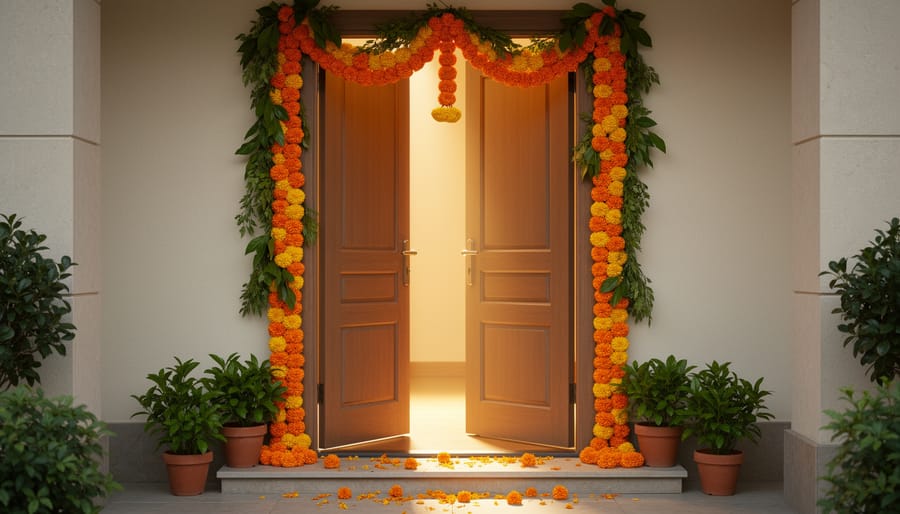
Autumn Celebrations: Navratri, Dussehra, and Diwali
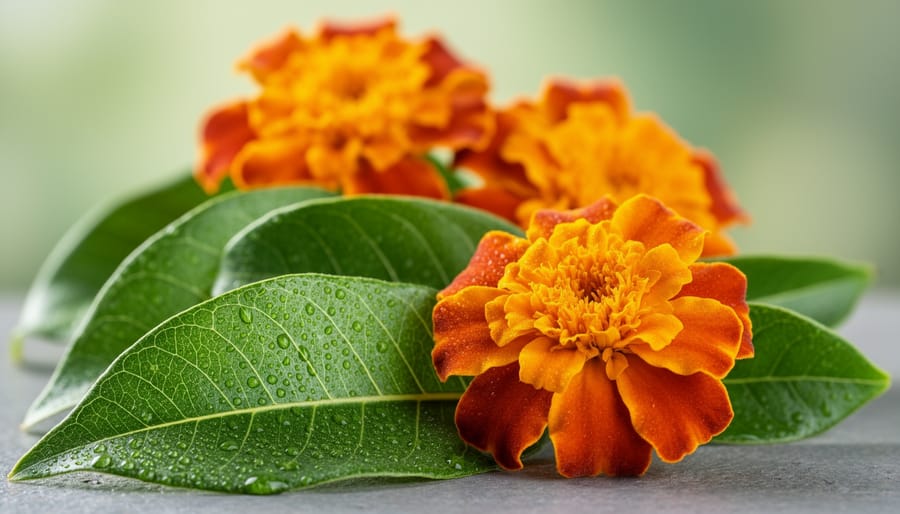
Autumn is peak season for floral decorating. Navratri, Dussehra, and Diwali arrive close together, so a little staging keeps everything fresh through the whole run. Exact dates move with the lunar calendar, so check a current calendar before you plan.
| Celebration | Traditional flowers and greenery | Suggested decorating window |
|---|---|---|
| Navratri | Marigold, jasmine, hibiscus, mango leaves | Toran and greenery 1 to 2 days before day one; fresh flowers added as needed |
| Dussehra | Marigold garlands, mango leaves | Fresh garlands the day before or the morning of |
| Diwali | Marigold, roses, lotus, mango leaves | Toran up to a few days ahead; rangoli and fresh arrangements 1 day before |
Mango leaf torans are the hardiest pieces, so hang them first. A toran at the front door can go up a couple of days early and still look lively. Keep it out of harsh afternoon sun, and mist it lightly to slow curling.
Save the delicate work for last. Marigold garlands, jasmine strands, and fresh flower rangoli look best installed the day before or the morning of. Place arrangements near the entryway and puja space once the area is cleaned, away from lamps and direct heat.
For a multi-day celebration, refresh rather than redo. Leave the toran in place, swap tired garlands for new ones, and top up the rangoli petals each morning.
Winter and Spring Celebrations: Pongal, Holi, and Ugadi
Pongal arrives in the cool of mid-January, and its decorations lean on sturdy, harvest-minded greens. Sugarcane stalks, banana leaves, and mango leaf torans can all go up two or three days ahead, since they hold up well in mild weather. Save the fresh flower garlands for the day before, so they still smell lovely when the pot boils over. If you want more ideas on keeping evergreens crisp in the colder months, our guide to winter greenery timing covers the basics.
Spring festivals call for a lighter touch. Ugadi is a good moment for a fresh mango leaf toran, hung the evening before or the morning of the new year, so the leaves stay glossy and green. Holi is different: bright petals look best set out right when guests arrive, and since the day is gloriously messy, keep delicate arrangements out of the splash zone. Marigold and rose petals for a welcome tray can be gathered the day before and kept in a cool spot, covered with a damp cloth.
Weddings and Family Gatherings Through the Year
Not every celebration lands on a festival date, but the timing logic stays the same. Housewarmings, satyanarayan pujas, engagement gatherings, and big family dinners all reward the same rhythm: hardy greenery and dried or artificial pieces a few days ahead, fresh flowers one to two days before.
So you don’t need a new plan for each occasion. Pick the calendar window you’re in, then adjust for weather and space the way we covered above. A summer puja in a warm flat means the jasmine garlands go up the morning of, while a cool winter housewarming gives you a little extra breathing room.
If you love changing your look with the seasons, this is where you can have fun. Think of the mango leaf toran as your steady base and swap the flowers to match the month. That’s the spirit behind decor that transforms with the seasons: one reusable setup, refreshed with whatever is blooming.
Save your countdown once, and you’ll have it ready for every gathering that follows.
What Shifts Your Timing: Weather, Flower Type, and Space
How Long Each Flower and Leaf Lasts
Not every festive flower has the same staying power, so it helps to know what to hang first and what to save for the final day. If you want more fresh floral ideas to mix in, check how sturdy each bloom is before you commit to an early install.
- Marigolds: hardy and long-lasting, usually fine for two to three days if kept out of direct sun.
- Jasmine: gorgeous scent but delicate, so string or place it on the morning of the celebration.
- Roses: look best within a day or two; keep stems trimmed and the arrangement cool.
- Mango leaves: sturdy enough for torans a few days ahead, though they curl as they dry.
- Banana leaves: stay glossy for a day or two; wipe them clean and keep them shaded.
- Tulsi and betel leaves: best added close to puja time, since they wilt quickly in heat.
A good rule of thumb is to put the toughest pieces up first, like mango leaf torans and marigold garlands, and add jasmine and roses last. Mist lightly, keep everything away from afternoon sun, and your entryway will still smell wonderful when guests arrive.
Indoors, Entryway, or Outdoors: Matching Placement to Timing
Picture your front door at dusk: a mango leaf toran swaying overhead, a marigold garland framing the frame, a small brass urn of petals on the step. That welcoming scene works best when each piece sits where it can actually survive.
The entryway is your showpiece, but it takes a beating. Afternoon sun and a busy doorway mean fresh garlands wilt fast, so hang them the morning of the celebration or the evening before. Hardy mango leaf and banana leaf torans can go up a day or two earlier, since leaves tolerate shade and light breezes far better than delicate petals.
Indoors, you have more control. A cool living room or puja corner away from windows keeps jasmine strands and rose centerpieces fresh for a full day or two. Sturdier marigold arrangements can sit out a little longer, as long as they stay out of direct sun.
Outdoors, think short and sturdy. Rangoli petal borders on a porch or courtyard look best made within hours of guests arriving, especially in heat. Dried flowers, artificial garlands, and sugarcane stalks can happily stand outside for days.
When in doubt, put the hardiest pieces in the toughest spots and save your most delicate blooms for shaded, sheltered corners.
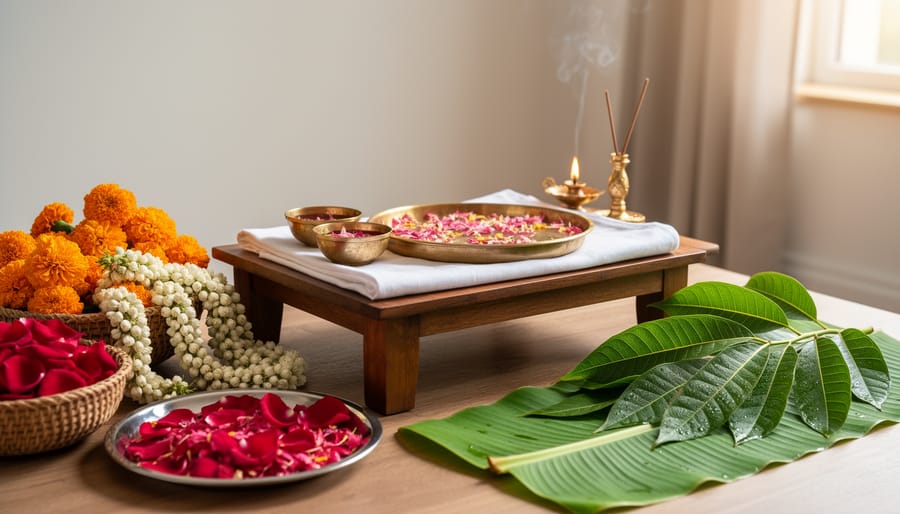
A Simple Countdown for Putting It All Together
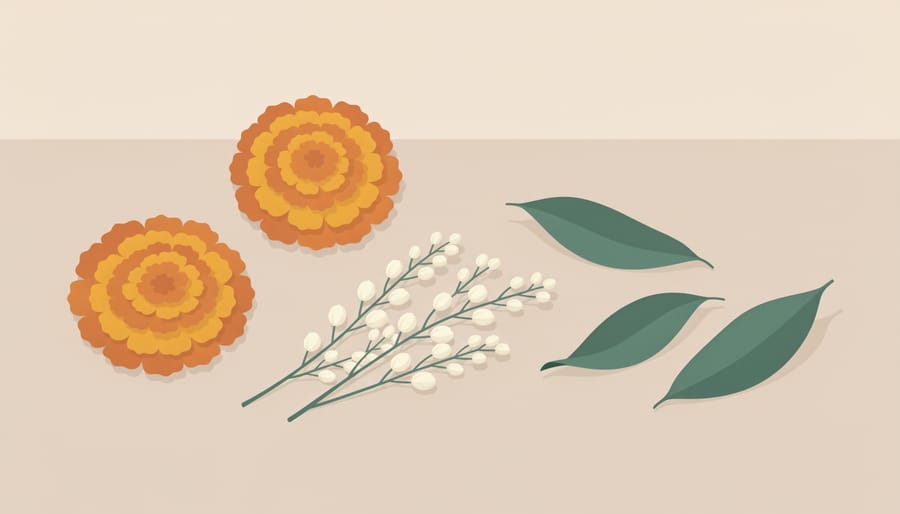
Here’s a simple way to pace yourself so the flowers look their best when guests arrive. Think of it as a gentle countdown, with the hardiest pieces first and the freshest ones last.
- One week before: Decide where each piece will go (front door, puja corner, dining table) and measure the doorway so your toran fits. Order marigolds and mango leaves from your florist or market, and ask which day the freshest stock arrives.
- Three to four days before: Set up any dried or artificial accents and hang hardy greenery, like banana leaves, that holds up well. Gather thread, needles, and wire for crafting.
- Two days before: Pick up your fresh flowers and greenery. Trim the stems on a slant, then keep everything in a cool spot, lightly misted and loosely covered with damp paper.
- The day before: String your marigold garlands and assemble the mango leaf toran. Hang the toran, add garlands to railings or doorframes, and place centerpieces away from direct sun.
- The morning of: Give everything a light mist, swap out any tired blooms, and add jasmine or other delicate flowers last so their scent is at its peak.
A little craft time makes the countdown even more enjoyable. To string a marigold garland, pinch off the flower heads, leaving a short bit of stem, and thread a long needle with strong cotton thread. Pass the needle straight through the center of each bloom, sliding them snugly together, and knot the ends when it reaches your desired length. For a mango leaf toran, fold each leaf’s stem over a length of cord and tie it with a small knot, working evenly along the cord until you have a full, leafy strand. Tuck in a few marigold blossoms for color.
If your schedule is tight, don’t worry. Crafting the day before is perfectly fine, and a garland made in the cool of the evening will look lovely by morning. Keep your supplies in one basket, put on some music, and let the making be part of the celebration itself.
Aftercare: Keeping Arrangements Fresh and What to Do When the Celebration Ends
Once the festival lights are on, a little care keeps your arrangements looking lively through the whole celebration. Mist marigolds and jasmine lightly each morning, trim the stem ends at a slant before they go into water, and keep vases away from heaters, direct sun, and the warm spot above the stove. A cool corner of the room is often all it takes to buy yourself an extra day or two.
When the celebration winds down, don’t just toss everything in the bin. Pull the petals from tired marigolds and roses and add them to your compost, or scatter them at the base of garden plants as a gentle mulch. If you love a seasonal craft, spread the best marigold heads on a tray in a shaded, airy spot until they feel papery. Dried blooms are lovely tucked into sachets, pressed into cards, or sprinkled into homemade potpourri.
Puja flowers deserve a little extra thought. Many families have their own customs for these, such as returning them to flowing water, a garden bed, or the soil beneath a tree, so follow whatever your household or community prefers. If you’re leaning toward earth-friendly decor, composting and drying fit that spirit nicely, and a few decor storage hacks will help you keep reusable pieces like brass bowls and artificial toran strands tidy until next year.
Can I make garlands a day ahead?
Yes. String them the day before, mist lightly, and keep them in a cool spot wrapped in a damp cloth or paper so they stay fresh.
How do I keep marigolds from wilting?
Keep them out of heat and direct sun, mist gently, and trim stems if they’re in water. Cool placement does most of the work.
Can I reuse greenery?
Hardier leaves and artificial pieces can often be reused for a smaller gathering, but soft fresh leaves usually look best used once.
What can I do with leftover petals?
Compost them, dry them for crafts and potpourri, or return puja petals according to your family’s customs.
When you get down to it, timing is the quiet secret behind every beautiful celebration. Hang hardy greenery early, bring fresh flowers in one to two days before the big day, and save the most delicate pieces for the last stretch. Let the weather, the flower type, and the spot in your home nudge that window earlier or later, and you’ll rarely be caught with drooping petals.
Before you start planning, here are a few festive terms worth keeping handy, along with how each one affects your schedule:
- Toran
- A decorative door hanging, often of mango leaves and marigolds. Leaves hold up well, so it can go up a few days ahead.
- Rangoli
- A floor design made with colored powder or petals. Flower versions are best made on the day itself, since petals wilt fast.
- Garland (mala)
- A strand of flowers worn or hung as decoration. Fresh ones are best strung within a day or two of the celebration.
- Puja thali arrangement
- A plate set with flowers, lamps, and offerings. Assemble it shortly before the ritual so everything stays fresh.
- Diya display
- A grouping of small oil lamps, often ringed with petals. Set the lamps early, then add petals just before lighting.
Most of all, enjoy the process. Stringing marigolds, arranging leaves, and filling the house with that fresh, earthy scent is part of the celebration itself. So pull out your calendar, sketch a simple countdown, and start planning your next display with confidence.