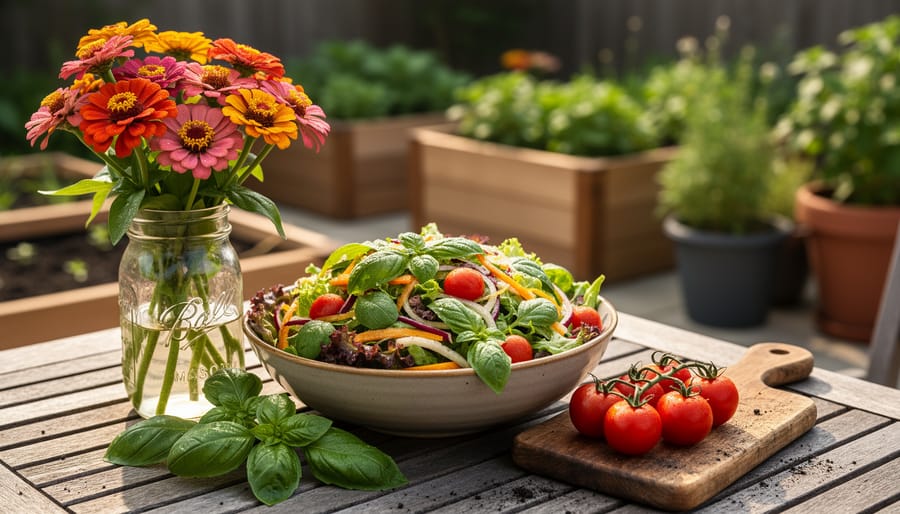
A sustainable backyard garden built for entertaining comes down to three moves: plant what you’ll actually serve, grow it in a way that gives back to the soil, and keep it simple enough to maintain between parties. Start with a handful of reliable edibles, like mint for lemonade, basil for caprese skewers, and cherry tomatoes for the snack board, then add a few flowers and herbs for the table. Most beginners can have a harvest-ready patch in one season. A sunny corner, a few containers, and a small compost bin are enough to begin.
Why does it work? Because a garden you cook from and decorate with earns its keep. Fresh-cut herbs perfume a pitcher of iced tea. A jar of zinnias on the picnic table does more for the mood than anything store-bought. And when you water wisely, feed the soil with kitchen scraps, and choose plants that suit your climate, the garden gets easier to care for each year instead of harder.
You don’t need acres, either. Renters can grow beautifully in pots on a patio, and small yards can go vertical with trellises and hanging planters. Think of it as a house tour for your outdoor space: every corner has a purpose, and every season brings something new to pick, pour, and place on the table.
Why Your Garden Is the Greenest Part of Your Party Plan
Think about the last time you hosted outdoors. The flowers came from a store, wrapped in plastic. The salad greens arrived in a clamshell box, and the herbs for the cocktails came in a tiny plastic pack that cost more than it should have. A backyard garden quietly changes all of that, and it makes your party better at the same time.
When you grow even a little of what you serve, the sustainability part happens almost on its own. Fresh basil snipped from a pot has no packaging and no trip in a refrigerated truck. Most produce travels a surprisingly long way before it reaches a shelf, and food miles and distance are a big part of why homegrown ingredients feel so much lighter on the planet. Your “supply chain” is a few steps from the back door.
Then there’s the flavor. A tomato warm from the vine or mint picked ten minutes before the drinks go out tastes brighter than anything from a bag, and guests notice. Flowers cut from your own beds bring a loose, natural charm that a stiff store bouquet can’t match, and there’s no florist foam or cellophane to throw away afterward.
A garden also gives your party a built-in way to waste less. Trimmings and plate scrapings can feed the soil, and blooms that start to fade can head to the compost instead of the trash. If you’re curious about other eco-friendly entertaining practices, a garden is one of the easiest places to start, because it supports so many of them at once.
The best part is that none of this requires a perfect yard or a big time commitment. A few pots of herbs and a patch of flowers are enough to make your next get-together feel greener, tastier, and a whole lot more welcoming.
Start With the Space You Have
Read Your Sunlight and Your Soil
Before you plant a single seed, spend a day simply watching your yard. Step outside in the morning, again around noon, and once more in the late afternoon. Notice where the sunlight lands and where shadows settle. Most vegetables, herbs, and flowering plants want about six hours of direct sun, while leafy greens and many shade-lovers are happy with a gentler dose. Jot down what you see, or snap a quick photo each time. By evening, you’ll have a surprisingly clear map of your best growing spots.
Keep your gathering space in mind as you look. A sunny corner near the kitchen door is perfect for herbs you’ll want to snip mid-party. A shadier nook might suit a lovely patch of mint and lettuce, with a table tucked nearby for guests.
Now, get to know your soil. Grab a handful from a few spots and give it a good squeeze. If it forms a sticky ball that stays put, it’s heavy with clay. If it crumbles and slips through your fingers, it’s sandy. If it holds together loosely and breaks apart with a gentle poke, you’ve got the crumbly, dark loam gardeners dream about. Give it a sniff too. Healthy soil smells earthy and sweet.
Whatever you find, it can be improved. Compost, which you’ll meet later, works wonders on every soil type.
Garden Ideas for Small Patios, Balconies, and Rentals
No yard? No problem. Some of the loveliest gatherings happen on a patio or balcony no bigger than a bath mat, and a few well-chosen containers can make that space feel like a little garden retreat.
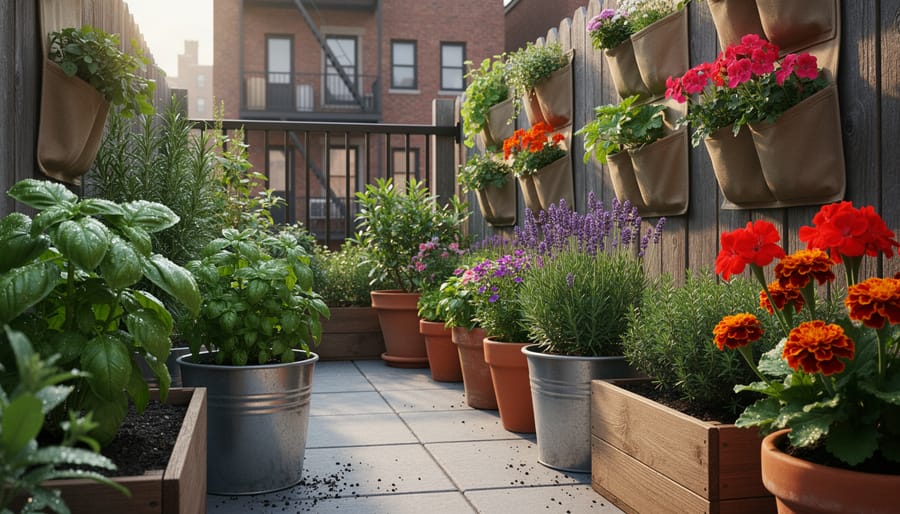
Start with pots, since they’re the easiest way in. Grab a few in different sizes and group them in odd numbers for a layered, collected look. A big pot of mint, a medium one of basil, and a small one of thyme read as a tiny herb corner. Make sure each one has drainage holes, and set saucers underneath so your deck or floor stays clean. Terracotta, glazed ceramic, and even repurposed buckets or wooden crates all work beautifully.
When floor space runs short, look up. A hanging planter or a trellis against the wall holds trailing strawberries, cherry tomatoes, or climbing nasturtiums. Railing boxes are another favorite, perfect for lettuce, chives, and parsley within arm’s reach of the grill. Just check your lease or building rules first, and use clamp-on brackets that won’t mark the railing.
Here’s the best part for renters: everything is portable. Tuck a pot on a wheeled caddy so it rolls into the sun, then rolls to the table when company arrives. A little rosemary in a pretty planter doubles as a centerpiece, and when moving day comes, your whole garden comes along with you.
Plants That Pull Double Duty for Hosting
Herbs and Edibles for the Menu
The best plants for a gathering are the ones you can snip, rinse, and serve within minutes. Start with a handful of forgiving edibles and you’ll feel like a seasoned host by your second weekend.
Mint, basil, chives, and parsley are the easiest place to begin. They grow happily in pots, bounce back after every harvest, and smell wonderful when you brush past them. Cut basil and mint in the cool of the morning, or just before guests arrive, and the flavor will be at its brightest. Loose-leaf lettuce is another winner because you can pick only the outer leaves and let the plant keep producing. Cherry tomatoes ripen a few at a time, which makes them perfect for grazing.
Here’s a quick guide to help you choose:
| Plant | Growing Style | How to Use It When Entertaining |
|---|---|---|
| Mint | Container (it spreads fast in the ground) | Muddled into lemonade, iced tea, or sparkling water |
| Basil | In-ground or container | Tucked into caprese skewers or tossed with tomatoes |
| Loose-leaf lettuce | In-ground or container | Piled into a fresh side salad, picked minutes before serving |
| Cherry tomatoes | In-ground or large container | Served in a bowl for snacking or skewered as appetizers |
| Nasturtiums | In-ground or container | Scattered over salads and platters for a peppery pop of color |
Edible flowers are the easiest way to make a simple plate look special. Nasturtiums and pansies float prettily in drinks or sit on top of a cheese board. Only eat flowers you grew yourself without sprays, and give them a gentle rinse first.
With a few pots by the back door, appetizers, drinks, and sides practically assemble themselves.
Cut Flowers and Greenery for Natural Table Decor
Picture a jar of zinnias, a few sprigs of mint, and a trailing branch of rosemary running down the center of your table. Nothing was shipped, nothing was wrapped in plastic, and it looks like it belongs to the evening.
Start with blooms that keep producing the more you cut them. Zinnias, cosmos, and sunflowers are generous and forgiving, and snapdragons add height. For greenery, lean on what’s already growing: mint, rosemary, lemon balm, and the soft silvery leaves of sage all smell wonderful and fill out an arrangement beautifully.
Cut in the cool of early morning, when stems are plump with water. Use clean scissors, snip just above a leaf joint, and drop the stems straight into a bucket of water. Strip any leaves that would sit below the waterline so the water stays fresh.
Skip the foam and florist wire. Mason jars, old pitchers, and tin cans work beautifully, and a cluster of mismatched containers feels relaxed and collected. Start with greenery as your base, then tuck in blooms at different heights for that loose, just-gathered look.
When the party’s over, nothing has to go in the trash. Toss spent stems in the compost bin, or pop a few mint and rosemary cuttings in water until roots appear, then plant them to grow next season’s centerpiece.
Pollinator-Friendly Plants That Bring the Garden to Life
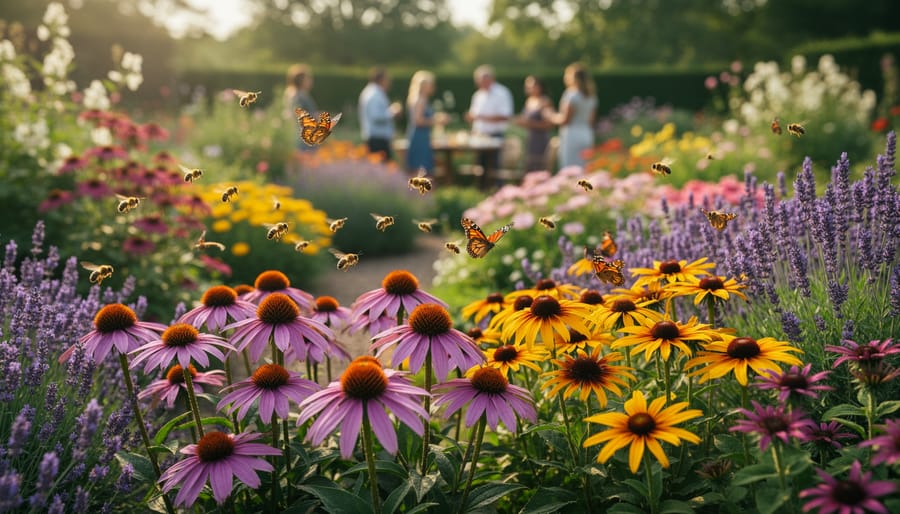
Some of the best entertainment in a backyard garden comes from the guests who never RSVP. Bees drift from bloom to bloom, and butterflies land on a petal just long enough for someone at the table to point and smile. Pollinator-friendly flowers give your gathering space that gentle movement, plus a generous wash of color.
Easy choices for beginners include lavender, zinnias, coneflowers, bee balm, and sunflowers. Lavender adds a soft, calming scent, while zinnias bloom in candy-bright shades all summer and keep on giving the more you cut them. Bee balm and coneflowers are tough, forgiving, and beloved by both bees and butterflies. Plant a mix of shapes and heights so something is always in bloom from spring through fall.
A little placement keeps everyone comfortable. Tuck the busiest blooms along the edges of the yard, a few steps from the dining table, so guests can enjoy the show without sharing their plates. Bees are generally gentle when left alone, and a bit of breathing room makes it easy for people and pollinators to share the evening.
Grow Green Habits Into Your Garden
Compost Your Way to Better Soil
A compost corner is easier than it sounds, and a backyard party fills it fast. Start with a simple bin or a tucked-away pile in a shady spot, then think in two layers. “Greens” are the wet, fresh scraps: veggie peelings, salad trimmings, herb stems, and spent flowers from your table arrangements. “Browns” are the dry bits: fallen leaves, shredded paper, cardboard, and dried garden clippings. Aim for roughly twice as much brown as green, give it a stir now and then, and keep it as damp as a wrung-out sponge.
After a gathering, scrape plates into a bucket and carry it out with the coffee grounds and any trimmings. Coffee grounds are a favorite because they break down quickly and feed your soil. Over a few months, the pile turns into dark, crumbly compost that smells like a forest floor after rain, and that earthy scent is how you know it’s ready. That matters because composting boosts soil nutrients your plants can use right away.
Know what to leave out, too. Skip meat, fish, dairy, greasy foods, and pet waste, since they attract pests and can cause odors. Also avoid diseased plants and anything sprayed with chemicals. Stick to plant-based scraps and you’ll have rich, free fertilizer for next season’s herbs and blooms.
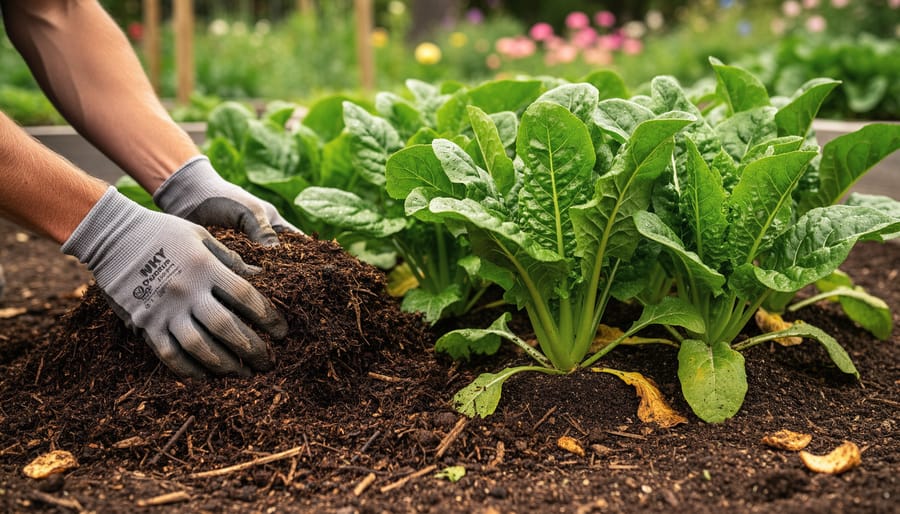
Smart Watering and Mulching
A lush garden doesn’t need a daily hose session. Water early in the morning, when the air is cool and the soil can drink before the sun steals it, and your plants will thank you all afternoon. A rain barrel under a downspout adds a free supply, and the stored water is gentler on herbs and greens than a blast from the tap.
Mulch does the quiet work in between. Mulch reduces water loss by shielding the soil from sun and wind, and it keeps weeds down too. Here’s a simple routine to set up this weekend:
- Pull any weeds and loosen the top inch of soil around your plants.
- Water slowly until the soil is damp a few inches down, then let it settle.
- Spread two to three inches of straw, shredded leaves, or wood chips over the soil.
- Keep the mulch about an inch away from stems so they don’t stay soggy.
- Water deeply once or twice a week, early in the day, rather than a little every evening.
- Refresh the mulch layer each season as it breaks down and feeds the soil.
Pretty, productive beds like these make it easy to pick herbs and blooms for edible centerpieces, so your table looks as fresh as your garden feels.
Bring the Garden to the Gathering
A Garden-to-Table Menu Made Easy
Building a menu around your garden is easier than it sounds. Start by walking the beds an hour or two before guests arrive and see what’s ready. Let the garden decide the dishes, not the other way around.
Pick herbs in the cool of the morning, when their oils are strongest, and snip salad greens just before serving so they stay crisp. Tomatoes taste best warm from the vine, so leave them on the plant until the last minute. Cut stems just above a pair of leaves, and the plant will bush out and keep giving.
For drinks, muddle a handful of mint or basil into lemonade, then let it sit in the fridge for an hour. Rosemary or thyme sprigs make a lovely syrup if you simmer them with sugar and water. A pitcher on the table, with a few edible flowers floating on top, feels instantly festive.
For food, keep things simple. Toss greens with olive oil, lemon, and torn herbs. Slice tomatoes and layer them with basil and a drizzle of good oil. Roast whatever’s overflowing with a little garlic and thyme. If you want the table itself to do double duty, try a vegetable centerpiece that guests can snack from.
Pair it all with relaxed seating and good lighting, and your yard starts to feel like a backyard summer resort, no travel required.
Set the Scene With Seasonal Garden Crafts
Crafting with what the garden gives you is one of the coziest parts of getting ready for guests. Nothing here needs special skills, and most of it comes from trimmings you’d otherwise toss.
Start with herb-bundle place settings. Snip a few sprigs of rosemary, thyme, or sage, tie them with a loop of twine, and tuck one onto each napkin. Guests get a little pop of green, and the scent drifts up as they sit down. Mint and lavender work beautifully too.
For something that lasts longer, make a pressed flower or leaf garlands. Lay small blooms and flat leaves between sheets of paper inside a heavy book for a week or two. Once they’re dry and papery, glue them along a length of string and hang it across a fence, pergola, or porch rail. It’s a soft, dreamy backdrop, and you can save the garland for next year.
Potted herb party favors send guests home with something living. Pop a small basil, chives, or parsley start into a thrifted teacup, a tin can, or a recycled jar, and add a handwritten tag with a quick care tip. They’re sweet on a place setting and cost almost nothing if you’ve been propagating cuttings.
Finish the evening glow with reusable jar lanterns. Slip a tea light or a battery candle inside a clean glass jar, then wrap the outside with twine and a few sprigs of greenery or wrap a ring of pressed leaves around the glass. Set them along the table or hang a few from a branch by wire handles. They flicker nicely as the sun goes down, and you can wash and reuse them all summer.
Light, Seat, and Serve With Less Waste
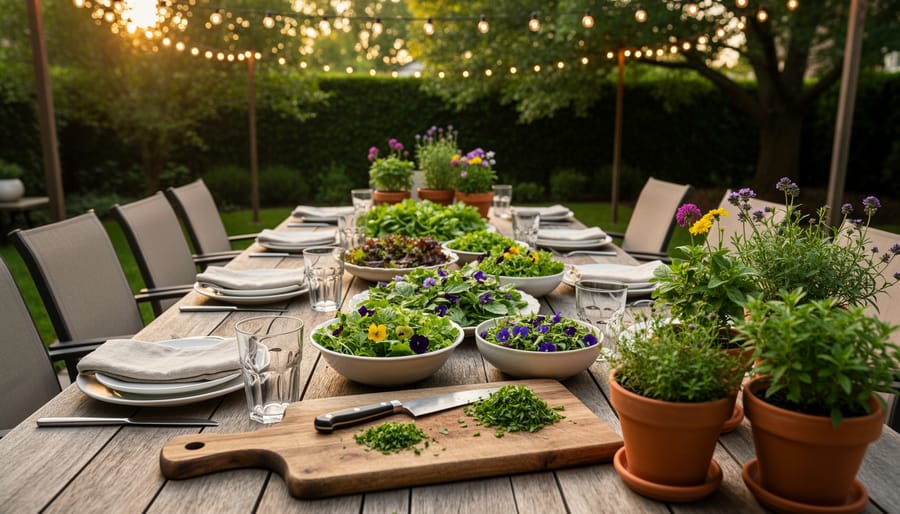
Once the garden is doing the heavy lifting, the rest of the setup can stay beautifully simple. Start with the table. Everyday plates, real glasses, and cloth napkins feel more special than disposables anyway, and nobody has to haul out a bulging trash bag at the end of the night. If you’re short on place settings, borrow a few from a neighbor or mix and match what you own. A little variety looks charming under string lights.
Speaking of lights, let the evening glow come from gentle sources. Solar stake lights tucked among your herbs, jar lanterns with a tea light, or a few candles in sturdy holders cast a soft, golden light that flatters the greenery. You’ll love how the leaves catch it.
For seating, look around before you buy. A cushioned bench, a few stools from the garage, a wooden crate topped with a folded blanket, or an old quilt spread on the lawn all invite guests to settle in. Use what you’ve got, add what feels right, and skip the guilt. Every small swap counts, and the party still feels like a party.
Keep the Cycle Going After the Party
When the last guest heads home and the string lights flicker off, the garden is already getting ready for what comes next. This is the quiet, satisfying part of hosting, and it takes less effort than you’d think.
Start with the leftovers. Scrape plate scraps, fruit peels, wilted salad greens, and coffee grounds into your compost bin. Toss in the spent flower stems from the table centerpieces too. Skip meat, dairy, and oily foods, which can attract pests and slow things down. Compostable napkins can go in as well.
Next, look at what you can pass along. Many herbs, like mint, basil, and rosemary, root easily from cuttings set in a jar of water on a sunny sill. Pot a few up as thank-you gifts for friends who stayed late to help. If a few flowers have gone to seed, snip the dried heads, shake the seeds into a paper envelope, and label it with the plant and date. You’ll have free seeds for next year.
Then give the garden a breather. Pull any plants that have finished, refresh the mulch, and water deeply once. A resting bed is a healthy bed.
As the seasons turn, think about what’s next. Swap tired summer tomatoes for cool-weather greens like kale or lettuce in fall, or tuck in spring bulbs before the first frost. Each change sets up your next gathering, with the same easy rhythm of growing, gathering, and giving back.
Common Questions About Sustainable Backyard Gardening for Entertaining
Planting questions tend to pop up right when the party date is circling closer, so here are the ones I hear most.
How far ahead should I plant before hosting?
Give yourself six to eight weeks for herbs and salad greens, since they grow quickly and forgive beginners. Cut flowers like zinnias need a bit longer, so plant those two to three months out.
What if I only have a tiny patio or balcony?
Start with three or four pots of herbs and one railing box of greens or edible flowers. Containers are easy to shuffle around, and they double as pretty table decor on party day.
Can I still grow food in a shady yard?
Absolutely. Mint, parsley, chives, and lettuces are happy with just a few hours of sun, and they often stay tender longer in the shade than they do in full heat.
How do I keep pests away without harsh products?
Tuck in companion plants like marigolds and basil, and rinse leaves with a gentle spray of water to knock off aphids. Healthy, well-mulched soil also does a lot of the work for you.
If you’re short on time, don’t let that talk you out of it. A few well-chosen plants that get watered and harvested regularly will do more for your gathering than a sprawling garden you can’t keep up with. Start small, enjoy the first snip of fresh basil, and let the garden grow along with your hosting confidence.
The best backyard gatherings aren’t the ones with the fanciest decor or the longest menu. They’re the ones that feel alive. A garden gives you that. It hands you the mint for the lemonade, the zinnias for the table, and the cherry tomatoes your guests pop into their mouths before dinner even starts. Everything tastes brighter and looks lovelier because it grew just a few steps from where everyone is sitting.
And here’s the good news: you don’t have to do it all at once. Start with a single pot of basil or mint on your patio step. Water it, snip a few leaves for your next get-together, and notice how good that feels. Next season, add a planter of flowers, a little compost corner, or a rain barrel. Small steps add up faster than you’d think.
That’s the heart of sustainable outdoor entertaining. It isn’t a chore or a checklist. It’s a joyful habit that makes hosting simpler, cozier, and more meaningful, season after season.
So grab a pot, tuck in a few herbs, and let your garden become the guest of honor. Your next gathering will be greener, tastier, and a little more magical for it.